Showing posts with label Water for Wildlife. Show all posts

March 25, 2018

Mojave National Preserve releases plan to remove most man-made wildlife water
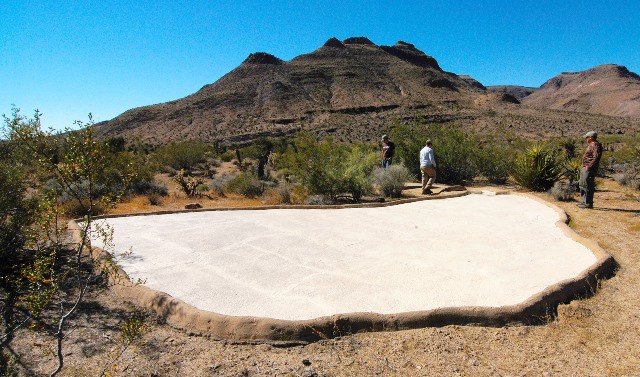
Most small game guzzlers like this one would be removed or neglected into a non-functioning condition under the new NPS policy.

By JIM MATTHEWS
www.OutdoorNewsService.com


This has happened before.

The Mojave National Preserve released its Management Plan for Developed Water Sources on Tuesday this past week along with the environmental assessment of the plan’s impacts, effectively laying the groundwork for the abandonment or removal of well over 100 historic man-made water sources and developed springs used by wildlife.

Wildlife enthusiasts have been down this road before on the Preserve, when its second superintendent, Mary Martin, directed the removal and destruction of historic cattle water sources that had served wildlife for over 75 years. This was a direct violation of the Preserve’s own management plan that called for the evaluation of the impacts that water removal would have before they were removed. That evaluation never happened, but over 100 water sources that benefitted wildlife were removed that time around.

Now, this week’s document lists four alternatives for action within the plan, but all four would lead to the loss of all but two or three of the developed water sources within designated wilderness areas. It would also lead to the loss of dozens of water sources outside of wilderness.

The impacts on wildlife this would cause within the Preserve are dismissed and not addressed in any detail in the plan, calling the impacts “localized and small,” without any supporting documentation.

The public has a 30-day window (until April 19) to comment on the plan. More information and copies of the plan are available on the Preserve website at this direct address: http://parkplanning.nps.gov/moja_waterplan_ea.

Behind the scenes, the Department of Fish and Wildlife field staff is seething over the NPS’ plan. These are the scientists who are watching decades of their water development work and resulting successes wildlife protection and mitigation for natural water source losses across the desert.

The official DFW statement from Jordan Traverso, Sacramento-based information chief, hinted at the outrage, but was restrained.

“Natural and reliable surface water sources are not always available in the current desert environment,” she said Saturday. “The Department has worked with many partners over the years, including the NPS, to establish and document the importance of reliable water sources for wildlife. Across the California desert and since the early 1950s, wildlife water developments have provided this basic necessity to support and stabilize desert wildlife populations.

“While wilderness protection would guide land managers toward keeping a natural and undeveloped landscape, the wildlife that live in these landscapes deal with the reality of the anthropogenic changes imposed upon them. Though they offer protection, large and wild spaces alone do not necessarily ensure that a viable wildlife population can be maintained in perpetuity given some of those changes on the landscape.

“As wildlife managers, we look forward to collaborating with land managing agencies to ensure that wildlife and the habitat needs they require are secured when making changes to available resources within the landscape.”

Hunting conservation groups feel betrayed. Their decades-long conservation efforts to restore and update these man-made guzzlers, spring developments, and the conversion of cattle water to wildlife water on the Preserve are set to be abandoned or destroyed.

In a nutshell, the plan is an assault on all wildlife within the preserve and spells out the agency’s vision of “wilderness.” That vision comes at the expense of all desert wildlife and virtually all the other mandates called for in the Preserve’s management plan. Those who have battled through the 233 pages of “bias and hypocrisy” have pointed out major flaws common to all alternatives.

Cliff McDonald, the president of Water for Wildlife, a conservation group that has repaired over 160 guzzlers in the past several years, including many on the Preserve before the work was halted there, was outraged by the lack of common sense in the NPS proposal.

McDonald pointed out that the 68 big and small game guzzlers within wilderness occupy less than 3/4s of an acre total ground space of the 804,000 acres of wilderness within the Preserve, but the Preserve staff believes that 3/4 acre impacts “wilderness character” to the detriment of the designation.

“The impact is on one one-millionth of the Preserve’s wilderness. One millionth! How is that impact of the wildness an issue?” asked McDonald. “Don’t the benefits of this water for desert wildlife outweigh the impacts?”

Ironically, even the current Preserve superintendent Todd Suess has admitted to DFW staff that the Wilderness Act doesn’t mandate the removal or abandonment of these historic structures to comply with the wilderness designation. In fact, on nearby Bureau of Land Management Lands, also designated wilderness, maintenance and even construction of new guzzlers has been allowed because of the value to wildlife.

According to opponents of the water plan, the hypocrisy comes in when you realize the plan’s alternatives continue to allow at least two big game drinkers within the preserve’s wilderness because of their documented importance to bighorn sheep, but somehow decided the other wildlife drinkers have no importance.

Yet, the National Park Service has done no assessment to evaluate the impact the removal of the other 66 man-made drinkers will have on all wildlife that currently use those water sources. It has been determined -- apparently by “fiat and lots of hypocrisy” -- that quasi-pristine wilderness is more important than wildlife. Ironically, most of the guzzlers would not be removed or their footprint restored, they would simply remain and allowed to decay until non-functional. So, theoretically, the negative impacts will still exist -- they just won’t serve an important wildlife function any longer. This is simply insane.

The NPS staff is also mandated to protect and maintain historic sites throughout the Preserve, and most of these guzzlers were made in the 50s, as part of a concerted effort by the state DFW to create and enhance water sources for wildlife, even then recognizing the important to mitigate for urban sprawl and loss of historic natural water sources. There has been no effort by Preserve staff to recognize the historic value of these guzzlers or to maintain them for their intended purpose.

The park service has even been obstructing the gathering of data that would show the importance of water for the Preserve’s wildlife. Eight years into a comprehensive deer study on the Preserve, the park service removed its support of the project when it was entering a phase when the importance of man-made water sources would be evaluated and tested by turning on and off some of these sources and measuring impacts. The reason support was removed: It wasn’t going to affect the park service’s decision on how to manage the water sources.

The document also says there are 311 natural springs on the Preserve. Somehow that number has increased in this period of drought from a list of 101 that were found to hold year-around water in the 2008 NPS survey of springs. Many of the 175 suspected springs checked during those surveys proved to be dry or seasonal water sources.

So, how has the number of springs increased?

Is that a fabrication that includes historic (now dry) springs, seasonal seeps, and tenejas? Who knows? Is the number included to make the Preserve seem awash in natural water?

It’s not. It’s a desert and barren of wildlife where there is not available water. Sadly, that includes most of the Preserve’s lands. Where there’s water, the Preserve is a wildlife oasis.

So what is this water removal plan really all about?

That is the mammoth in the creosote that no one is talking about:

Fundamentally, it is about the bias the NPS staff has against the Preserve’s number one visitor: Hunters. Hunters still make up the bulk of the visitation on the Preserve. Hunters are the only volunteers trying to maintain this desert wildlife water since that job was abandoned by the state Department of Fish and Wildlife and never even attempted by the federal land management agencies, like the NPS.

Hunters (and cattle ranchers) are the only reason there is the diversity and quantity of wildlife there is on the Preserve. Over 350 species of birds and mammals have been documented on the man-made water. (So, no, it’s not only about the seven species of wildlife that may be hunted in the desert.) Preserving and adding water in desert is a good thing for all wildlife, and it is a means of mitigating for what has been lost through human activity elsewhere in the Mojave.

But it still sticks in the craw of the National Park Service staff that hunting was allowed on the vast property, and they are willing to sacrifice the Preserve’s wildlife to try to reduce or eliminate the number of hunters. They are willing to abandon 75 years of solid conservation efforts to bring the deer and desert sheep herds back. They are willing to dramatically reduce the numbers and diversity of birds and small mammals for their agenda.

There is no other explanation for this insanity. They all know the Wilderness Act doesn’t mandate actions this extreme. There is simply no other explanation.

Hopefully, enough people will get their federal representatives involved. Maybe then Ryan Zinke, the Secretary of Interior, will hear about this outrageous proposal and have it quietly withdrawn because it clearly violates Interior policy about cooperation with state game agency efforts and a recent policy to enhance recreational opportunities -- like hunting -- where appropriate.

The NPS staff got away with ripping out the cattle/wildlife water and seriously impacted the Preserves wildlife populations over a decade ago. That can’t happen again.

March 5, 2017

BLM stops efforts to restore desert water sources

Jim Matthews
By Jim Matthews
Hesperia Star
www.OutdoorNewsService.com


Water for Wildlife, a desert conservation organization that restores water sources in the Mojave Desert for wildlife, has been stopped from doing its work for the second time two years. This past week, the Needles office of the Bureau of Land Management refused to allow the group to conduct its March and April projects on guzzlers in the Clark and Kingston mountains region northeast of Baker.

The group was also stopped from restoring guzzlers on the Mojave National Preserve late in 2015, pending a determination from the National Park Service that work could continue. There has been no determination, yet, from the NPS and no word on the progress of the analysis.

The most recent stoppage of this work came Wednesday this past week in a letter from Daniel Vaught, assistant field manager in Needles for the BLM. Vaught wrote that "our archaeologist has recently expressed concerns regarding the cultural and historical resources and impacts involved in the small-game guzzler restoration."

Cliff McDonald, Water for Wildlife coordinator, said he asked for the letter after a meeting recently when he was told the group's work would need to cease until these concerns could be addressed.

In this meeting, McDonald said he asked why these concerns weren't made last year or the year before. The group has been restoring wildlife water sources for 11 years in the region. McDonald said Vaught had no answers, except to say that the current archaeologist, Chris Dalu, has been on the job for five years in Needles and was suddenly now concerned.

McDonald cancelled the March 16-19 project, and the April 6-9 project was tentatively cancelled, pending a another meeting with BLM this coming week.

McDonald said the BLM has not identified any "cultural and historical resources" on any of the sites where they have worked in the past, and that their efforts have all been done on locations that were developed in the 1950 and 60s in joint efforts between the BLM and Department of Fish and Wildlife. These "administrative sites" were disturbed historically, and the restoration efforts do not enlarge the footprint of the site. McDonald doesn't know why they are doing this now.

Safari Club International, already in the midst of a battle with the National Park Service over its refusal to allow guzzler and windmill restorations to continue on the Mojave National Preserve, immediately jumped in to assist in "this important work for wildlife."

In a letter to all members in the Orange County Chapter, Jim Dahl asked its member to write or call Vaught to remind him that for 11 years "Water for Wildlife has restored water drinkers... (and) have made significant investments and have a long history of restoring guzzlers."

Craig Stowers, the deer program coordinator with the state DFW, wrote to McDonald in an unofficial capacity to say, "it's not OK with DFW that this is going on. We have a significant investment there, too, and (have) a long history of working in this field.... It is a disturbing direction for them to go, and I'm at a loss to explain why this is suddenly an issue for them now."

Clark Blanchard, an assistant deputy director with the DFW in Sacramento, said the issue just popped up on the radar, but said — in an official capacity — that "the department is aware of the issue and is diligently working to find solutions in order to allow this work to continue."

Neither the BLM's Vaught nor Dalu were available for comment Friday.

Those are the facts as we know them now.

What we have is two federal land management agencies, adjacent to each other, fighting to stop volunteer wildlife water restoration efforts.

It is ironic for the Needles office of BLM to jump in bed with the National Park Service on this issue. After years of battling with the state DFW, the BLM has a memorandum of understanding (MOU) with the DFW to even allow guzzler restoration in BLM wilderness areas, including the building of new water sources. Restoring existing sites is not even an issue any longer. Or it wasn't. But now we have some low-level bureaucrat suggesting restoring existing desert water sites is going to harm archeological resources? And he's saying this without a shred of data to support his claim.

The National Park's argument for stopping guzzler restoration was equally as specious and completely lacking in data (or even common sense):

In a nutshell, Todd Suess, the new superintendent of the Preserve, listed two reasons why guzzler water restoration was stopped. First, he wrote that guzzlers might be historical sites and we can't restore them until we determine if they are historical sites and then we can decide if they need to be restored or not. (It was that convoluted.) The caveat was that they didn't have anyone who could tell if they were historical sites or not, so we can't do anything. Second, he wrote that all guzzler water restoration had to stop until the Preserve-wide water management plan could be completed and implemented. That is like saying, you can't replace a sign or repair a campground restroom until the Preserve's entire facilities development plan is done. And of course, the water management plan is at least three or four years away from completion.

The "reasons" are both smokescreens to stop work that had been ongoing for nine years in the Preserve and 11 years on BLM land. Where was the concern before the work stoppage? Why are these specious administrative arguments, using obscure rules and regulations, being used now to stop important wildlife field work?

That's the question that needs to be asked.

Here's the answer: It's about hunting. I'm not the first person to point out that it all started when Todd Suess was named the new superintendent of the Mojave National Preserve. I'm sure Suess is a good guy, but it's pretty clear that he doesn't particularly like hunting and hunters. Maybe he's even neutral on hunting. But his friends and staff who don't like hunters know this guzzler and water restoration work is primarily being done by hunter conservationists. And they have his ear. If it's not him, then it's his staff and associates who are persuading this man to issue bad rules based on bad information that is anti-hunting, pure and simple. The decision are certainly not pro-wildlife, sound administration, or correct use of the regulations. It can only be a bias against hunting.

July 10, 2016

Water for Wildlife restores 13 guzzlers in East Mojave Desert

Water for Wildlife volunteers put the finishing touches on guzzler B226 near Flat Top Mountain in February 2016. The large concrete apron on the right collects rainwater, funneling it downhill into the storage tank on the left. Inside the crescent-shaped opening is a wildlife ramp that allows access the water inside. (Photo: Chris S. Ervin) 
By Jim Matthews
Victorville Daily Press


Cliff McDonald and his group of volunteers at Water for Wildlife announced the results of their efforts this winter and spring. In a nutshell, a total of 13 wildlife water sources (guzzlers) were restored and filled in the eastern part of the Mojave Desert over a total of four work weekends.

The volunteers invested over 1,500 hours of effort into the repairs and spent over $9,000 on materials and tools needed to complete the work, or just over an average of $725 per drinker.

Their efforts assure that a wide variety of desert birds, mammals, and even reptiles will have a permanent water supply this summer and fall, and since most desert species still need open water to survive, these man-made drinkers — often called guzzlers — are the only thing between life and death, especially during our ongoing drought.

These guzzlers all have similar features. First, they have an “apron,” which can be made of a variety of materials, that captures rain waters and funnels it into a storage tank (above or under the ground), and then access to the water is provided by a drinker box or simply an opening in the tank and ramp down to the water. Most of the guzzlers in the Mojave were made in the 1950s and 1960s by the Department of Fish and Wildlife (formerly Fish and Game), with little or no maintenance since then. While many still hold water, most are in various states of disrepair. They either hold no water or hold far less water than they could if functioning at their full potential.

Over the 10 years Water for Wildlife volunteers have been working on guzzlers in the East Mojave, they have now restored 75 guzzlers and five springs, and they repaired a number of water tanks and windmills on old cattle systems that now exclusively serve wildlife. This has involved over 7,500 volunteer hours and $50,000 in private funding.

The payoff is that over 300 species of birds and at least 45 mammal species have been documented using these important water sources, which increasingly serve as mitigation for natural water sources lost to development and ground-water pumping across the Mojave Desert.

So where’s the Sierra Club or the Humane Society in supporting this important work, making sure desert wildlife survives during this drought? Where are all the other conservation and environmental groups when it comes to actually doing things on-the-ground to help wildlife?

I’ll tell you where, they are MIA – missing in action.

They spend all their money on making sure you rejoin, fundraising, lobbists and attorneys. None of them spend a dime on actually doing anything that make a difference for wildlife. In fact, the Sierra Club and Center for Biological Diversity have repeatedly fought against guzzler construction and restoration on the basis that they are “unnatural.” Well, human groundwater pumping and housing developments are “unnatural,” and they have led to the drying up of desert springs and seeps for decades. Guzzlers and other man-made water sources act as mitigation for these other losses. But loony fringe won’t hear of that.
Even the new superintendent of the Mojave National Preserve, Todd Suess, where Water for Wildlife would have directed all of its efforts this year, threw up a bunch of bogus reasons to stop guzzler repairs on the Preserve (even after the previous two superintendents endorsed and supported McDonald’s work). So the guzzler repairs were all done on BLM lands out of the Preserve again this year.

If you care about desert wildlife, know that water is the most critical factor in their survival. The only groups assuring that desert water sources are maintained for wildlife are groups like Water for Wildlife. I give McDonald’s group a lot of publicity because it amazes me how many volunteers come from so far to work so hard for nothing. But the High Desert (Apple Valley) and Ridgecrest Quail Forever chapters (and all the other QF chapters, for that matter) do as much work as McDonald’s volunteers in the west Mojave. The Society for the Conservation of Bighorn Sheep focuses on the bigger “guzzler” projects primarily aimed at helping desert bighorns, and the Southern California Chapter of the California Deer Association works on springs, guzzlers, and other waters all across the southern half of the state. Leon Lessica’s Desert Wildlife Unlimited’s desert water work in the Imperial Valley may be the only reason we have a healthy desert burro deer and bighorn population there.

The one thing you need to know about all of these groups is that they usually can muster up enough volunteer manpower for their projects (although more, younger volunteers are always welcome), but they frequently have to scrape and beg enough money together to get the materials they need for this work. Donations are always appreciated. With other so-call conservation or environmental groups you might get a letter or phone call after you join or donate, but the letter or call is to ask for money. With these groups, the letter or call you receive is just offering heartfelt thanks and perhaps information on where you dollars are going to be spent so you can see the results of your donation.

You can find out more information out Water for Wildlife at the group’s new website at waterforwildlifeemd.com. You can find all the local Quail Forever, Society for the Conservation of Bighorn Sheep, and California Deer Association chapters with searches on the Internet. If you have trouble, you can e-mail me and I can help you out.

April 7, 2014

Debate flares over providing wildlife artificial water sources

Cliff McDonald (standing) helps a Water for Wildlife volunteer patch cracks in a cement "drinker" at the Mojave National Preserve. (Katherine Davis)

Katherine Davis
89.3 KPPC
Southern California Public Radio


Listen to Podcast [4 min 16 sec]

Mojave National Preserve — A stretch of protected desert northeast of Los Angeles — is currently reviewing its water management plan. One question officials are considering is whether to continue providing artificial water sources for desert wildlife.

As part of the Works Progress Administration, hundreds of concrete "drinkers" were installed across the desert in the 1940s. They're giant concrete saucers that funnel rainwater into cisterns that animals drink from. But after half a century in the desert sun, most of the drinkers are cracked and needing repairs.

A group called Water for Wildlife has voluntarily repaired these drinkers for years. Now debate is underway on whether these drinkers should be removed.

In nine years, Water for Wildlife's Cliff McDonald and hundreds of volunteers have repaired about 100 of these drinkers. They come out for one weekend a month during winter and spring. They camp overnight, and little by little, they’re making progress.

“[One] particular drinker had not been working, so we repaired it, and within 60 days there was a tortoise coming out of it where he had just gotten a drink,” McDonald said. “That same tortoise was estimated to be about 60 years old, so he could have watched the guys build it 60 or 70 years ago.”

But even if quail, tortoises, and other desert animals like having easy spots to find water, not everyone agrees that these drinkers should be maintained.

“If you’re trying to manage just one part of an [ecosystem], then you can upset the functioning of the rest of the system,” said Terry Weiner, conservation coordinator with the Desert Protective Council. “The problem [with artificial water] is that it can become what we call an ‘attractive nuisance,’ and animals that would not be drawn to that area before will perhaps go there.”

Like many other environmental groups, Weiner’s organization worries that the drinkers interfere with a desert ecosystem that evolved to survive with limited water.

That’s exactly the argument the Mojave National Preserve is weighing now as it develops a new water management plan.

“From the scientific standpoint there’s really not a lot of evidence that artificial water is all that beneficial," said Neal Darby, a wildlife biologist with the preserve. "We know animals use it, but we can’t say that if they didn’t have it they would all die. And that’s where the problem is, it’s a very difficult hypothesis to test,” he said.

It’s difficult to test because one possible outcome of taking away the drinkers is that desert wildlife could start to die off.

Humans have been in California’s deserts for centuries, and in many cases, settlers created artificial water sources for their cattle or crops, which wildlife eventually began to rely on too. Humans have also used up some natural water sources throughout the desert. That’s why McDonald and his volunteers say maintaining artificial water is important.

But some environmentalists call McDonald’s motivations into question.

“In too many cases we find the people who are really enthusiastic about establishing guzzlers throughout the desert are people who want to make sure the population of animals is such that the can keep hunting them,” said Weiner. “We’re not opposed to appropriate hunting, but having artificial water sources to artificially pump up the population of [animals] is not a good idea.”

Like many of his volunteers, McDonald does hunt. But, he says of the hundreds of species in the desert that use the drinkers, only a handful are of any interest to hunters. And, he says, keeping all of those wildlife populations thriving should be of interest to everyone.

“If I’m the general public and I do not hunt and I want to come out here to camp, I’d want to see flickers and warblers and blue jays, and they drink this water,” McDonald said.

McDonald also said that hunting licenses help pay for a lot of other environmental projects. Darby agrees.

“There’s not a lot of funding available,” said Darby. “These sportsman’s groups really step up to the plate and help [the Mojave National Preserve] get things done.”

What Darby, McDonald, and other environmental groups can all agree on, is that California’s desert ecosystems should be protected. The question is, whether giving wildlife unnatural sources of water really helps.

It’s a major debate, but it’s not enough slow down McDonald and his volunteers.

“My dad and I hunted together, we fished together and we saw a lot of wildlife. A lot of that wildlife was drinking out of a stream or drinking out of one of these artificial drinkers and I would like the future generations to be able to see that,” McDonald said.

But in drought years like this one, if wildlife can’t get water, McDonald isn’t sure that will be possible.

February 21, 2013

Water for Desert Wildlife comes at an expense

Jim Niemiec
Western Outdoor News


Mother Nature has blessed the high desert with more than a normal amount of rain thus far this year, in addition to laying down some snow at higher elevations and freezing pockets of water in the crags of lava and granite rock. After last year's rather dismal inches of rain in the desert regions across California, Arizona and even up into northeastern Nevada, upland game bird hunters had to work hard at even finding small coveys of native chukar at higher elevations. Bird hunters that headed out after quail did a little better finding coveys of birds but they were small coveys and not near the number that a scatter gunner would hope for.

GUZZLER IN NEED OF REPAIR — This high desert guzzler is need of attention to provide desert wildlife with fresh water.

Down in Baja California and over to Baja Norte there was better rain that produced a good crop of California Valley quail for the San Telmo Valley and other arroyos south of Ensenada. Mexicali enjoyed good gunning for native pheasant and all three species of dove, but quail numbers were down. Clear down in Los Mochis there was excellent dove hunting for mourning and white-winged dove, blue pigeons and lots of ducks. One reason that Mexico seems to offer up good numbers of birds is all the farming that takes place, which brings along fresh water to irrigate and vast marshes flushed with seeds carried on to the wetlands by way of canals.

One outstanding organization that is working countless hours to bring life back to the high desert in general, the Mohave National Preserve and Bureau of Land Management holdings is the Water for Wildlife Project.

There were a total of 6 projects in 2012 starting with one in Goffs. During the course of the year Water for Wildlife volunteers completely restored 10 wildlife drinkers/guzzlers, rehabbed 3 others, Blue Maxed and patched 5 underground tanks, changed the oil in 3 windmills, buried 100 ft. of plastic pipe to prevent the public from removing a water source, installed a 100 gallon plastic tank inside an old windmill, dug out three springs and got the water flowing, built and installed two ramps for the wildlife to access the water, plus hauling over 4,000 gallons of water to the drinkers!

Cliff McDonald heads up Water for Wildlife and gathers many volunteers and supporters together and also coordinates the collection and transportation of products, material, and food that is used to bring a sustainable water supply in the desert for wildlife.

VOLUNTEERS WORKING ON A GUZZLER — These volunteers are active in Water for Wildlife and donate many man-hours to bring fresh water to the normally dry and vast desert.

Water for Wildlife has scheduled 5 more projects for 2013 and they are: Feb. Mojave National Preserve, Mar. BLM near Essex, April BLM near Essex or Mojave National Preserve, May Mojave National Preserve and June the Mojave National Preserve.

To give a person a perspective on how much material is required to repair guzzlers for the use of wildlife in the desert McDonald totaled up products and costs for 2012 projects: Concrete surfacing material cost $4,000, Merlex cost $400, Concrete ran $400, Tank cost $100,
Hydro-seal was $200, Misc. supplies and tools totaled $200 and there was another $1,000 spent on food to feed the many volunteers bringing the total expenditures for Water for Wildlife projects to $6,350, and this does not include the donated man hours, vehicle use, gas and the many other support items donated by members of this conservation group.

There were over 2000 man hours donated to Water for Wildlife projects last year, some behind the scene work and including financial donations which helped bring it all together.

Western Outdoor News thought it would be a good idea to report on one of the projects completed by Water for Wildlife in June of last year. The following is a recap of the events that took place on the Blair Ranch, which might give readers a good feeling of the valuable work being done by this organization.

June 2012 Review - Fifty-four volunteers showed up for the last project of the year. Friday morning around 8 a.m. Josh and I arrived at the camp site on the Blair Ranch. Lyle, Jim, Frank, BL and Doug had already been working on projects the previous three days. These guys finished one drinker, rehabbed another and hauled 2,500 gallons of water to the site ---they worked their butts off.

FINISHED GUZZLER READY FOR WILDLIFE — This guzzler has been rehabbed and is now ready to provide drinking water for desert wildlife. Many successful projects have been completed by volunteers and supporters of Water for Wildlife.

Myself, along with several volunteers headed out to dig and bury 100 feet of water line, the location for this dig was about 50 miles from our camp site at Marl Springs. Another crew headed south to dig out another spring, while the third crew ventured into the desert to work on another wildlife drinker. Lots of work was done this day and the crews managed to complete all projects that were scheduled for that weekend. We all returned back to camp and again the cooks and waiters were working hard making sure we were all were served a great dinner of ranch fed cattle hamburgers with all the trimmings, including BBQ beans, corn on the cob and Marie's famous per salad. We were also treated to an appetizer table that was overflowing with treats. Jim's homemade cheese-balls, homemade salsas, chips, 7 layer bean dip and pinwheel wraps. Topping off dinner after a full day of working in the desert there were 5 different kinds of homemade pies to choose from along with whipped cream topping...as told by Cliff McDonald.

Water for Wildlife receives a lot of support from many people and companies. A few that have been with this conservation project for many years include: CA Deer Association, Orange County Chapter of SCI, Predator Callers of Orange County, Quail Forever and Quail Unlimited, Society for Conservation of Bighorn Sheep and the Quail and Upland Wildlife Federation. Other companies supporting this valuable service to wildlife in the desert include; Alpen Optics, Barstow Wheel and Tire, H20asis (ice) Hargus Disposal, Daniel's Septic and the many volunteers that devote meaningful hours to Water for Wildlife.

To find out more about Water for Wildlife, future projects and how to get involved in their conservation projects call Cliff McDonald at (760) 449-4820 or contact him by way of his email at bigmc@ctaz.com.