Showing posts with label cultural resources. Show all posts

March 25, 2018

Mojave National Preserve releases plan to remove most man-made wildlife water

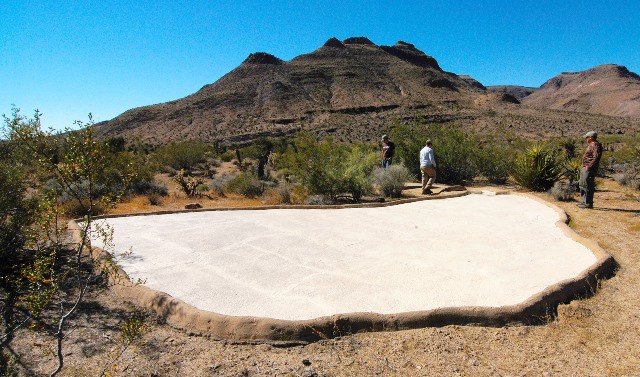
Most small game guzzlers like this one would be removed or neglected into a non-functioning condition under the new NPS policy.

By JIM MATTHEWS
www.OutdoorNewsService.com


This has happened before.

The Mojave National Preserve released its Management Plan for Developed Water Sources on Tuesday this past week along with the environmental assessment of the plan’s impacts, effectively laying the groundwork for the abandonment or removal of well over 100 historic man-made water sources and developed springs used by wildlife.

Wildlife enthusiasts have been down this road before on the Preserve, when its second superintendent, Mary Martin, directed the removal and destruction of historic cattle water sources that had served wildlife for over 75 years. This was a direct violation of the Preserve’s own management plan that called for the evaluation of the impacts that water removal would have before they were removed. That evaluation never happened, but over 100 water sources that benefitted wildlife were removed that time around.

Now, this week’s document lists four alternatives for action within the plan, but all four would lead to the loss of all but two or three of the developed water sources within designated wilderness areas. It would also lead to the loss of dozens of water sources outside of wilderness.

The impacts on wildlife this would cause within the Preserve are dismissed and not addressed in any detail in the plan, calling the impacts “localized and small,” without any supporting documentation.

The public has a 30-day window (until April 19) to comment on the plan. More information and copies of the plan are available on the Preserve website at this direct address: http://parkplanning.nps.gov/moja_waterplan_ea.

Behind the scenes, the Department of Fish and Wildlife field staff is seething over the NPS’ plan. These are the scientists who are watching decades of their water development work and resulting successes wildlife protection and mitigation for natural water source losses across the desert.

The official DFW statement from Jordan Traverso, Sacramento-based information chief, hinted at the outrage, but was restrained.

“Natural and reliable surface water sources are not always available in the current desert environment,” she said Saturday. “The Department has worked with many partners over the years, including the NPS, to establish and document the importance of reliable water sources for wildlife. Across the California desert and since the early 1950s, wildlife water developments have provided this basic necessity to support and stabilize desert wildlife populations.

“While wilderness protection would guide land managers toward keeping a natural and undeveloped landscape, the wildlife that live in these landscapes deal with the reality of the anthropogenic changes imposed upon them. Though they offer protection, large and wild spaces alone do not necessarily ensure that a viable wildlife population can be maintained in perpetuity given some of those changes on the landscape.

“As wildlife managers, we look forward to collaborating with land managing agencies to ensure that wildlife and the habitat needs they require are secured when making changes to available resources within the landscape.”

Hunting conservation groups feel betrayed. Their decades-long conservation efforts to restore and update these man-made guzzlers, spring developments, and the conversion of cattle water to wildlife water on the Preserve are set to be abandoned or destroyed.

In a nutshell, the plan is an assault on all wildlife within the preserve and spells out the agency’s vision of “wilderness.” That vision comes at the expense of all desert wildlife and virtually all the other mandates called for in the Preserve’s management plan. Those who have battled through the 233 pages of “bias and hypocrisy” have pointed out major flaws common to all alternatives.

Cliff McDonald, the president of Water for Wildlife, a conservation group that has repaired over 160 guzzlers in the past several years, including many on the Preserve before the work was halted there, was outraged by the lack of common sense in the NPS proposal.

McDonald pointed out that the 68 big and small game guzzlers within wilderness occupy less than 3/4s of an acre total ground space of the 804,000 acres of wilderness within the Preserve, but the Preserve staff believes that 3/4 acre impacts “wilderness character” to the detriment of the designation.

“The impact is on one one-millionth of the Preserve’s wilderness. One millionth! How is that impact of the wildness an issue?” asked McDonald. “Don’t the benefits of this water for desert wildlife outweigh the impacts?”

Ironically, even the current Preserve superintendent Todd Suess has admitted to DFW staff that the Wilderness Act doesn’t mandate the removal or abandonment of these historic structures to comply with the wilderness designation. In fact, on nearby Bureau of Land Management Lands, also designated wilderness, maintenance and even construction of new guzzlers has been allowed because of the value to wildlife.

According to opponents of the water plan, the hypocrisy comes in when you realize the plan’s alternatives continue to allow at least two big game drinkers within the preserve’s wilderness because of their documented importance to bighorn sheep, but somehow decided the other wildlife drinkers have no importance.

Yet, the National Park Service has done no assessment to evaluate the impact the removal of the other 66 man-made drinkers will have on all wildlife that currently use those water sources. It has been determined -- apparently by “fiat and lots of hypocrisy” -- that quasi-pristine wilderness is more important than wildlife. Ironically, most of the guzzlers would not be removed or their footprint restored, they would simply remain and allowed to decay until non-functional. So, theoretically, the negative impacts will still exist -- they just won’t serve an important wildlife function any longer. This is simply insane.

The NPS staff is also mandated to protect and maintain historic sites throughout the Preserve, and most of these guzzlers were made in the 50s, as part of a concerted effort by the state DFW to create and enhance water sources for wildlife, even then recognizing the important to mitigate for urban sprawl and loss of historic natural water sources. There has been no effort by Preserve staff to recognize the historic value of these guzzlers or to maintain them for their intended purpose.

The park service has even been obstructing the gathering of data that would show the importance of water for the Preserve’s wildlife. Eight years into a comprehensive deer study on the Preserve, the park service removed its support of the project when it was entering a phase when the importance of man-made water sources would be evaluated and tested by turning on and off some of these sources and measuring impacts. The reason support was removed: It wasn’t going to affect the park service’s decision on how to manage the water sources.

The document also says there are 311 natural springs on the Preserve. Somehow that number has increased in this period of drought from a list of 101 that were found to hold year-around water in the 2008 NPS survey of springs. Many of the 175 suspected springs checked during those surveys proved to be dry or seasonal water sources.

So, how has the number of springs increased?

Is that a fabrication that includes historic (now dry) springs, seasonal seeps, and tenejas? Who knows? Is the number included to make the Preserve seem awash in natural water?

It’s not. It’s a desert and barren of wildlife where there is not available water. Sadly, that includes most of the Preserve’s lands. Where there’s water, the Preserve is a wildlife oasis.

So what is this water removal plan really all about?

That is the mammoth in the creosote that no one is talking about:

Fundamentally, it is about the bias the NPS staff has against the Preserve’s number one visitor: Hunters. Hunters still make up the bulk of the visitation on the Preserve. Hunters are the only volunteers trying to maintain this desert wildlife water since that job was abandoned by the state Department of Fish and Wildlife and never even attempted by the federal land management agencies, like the NPS.

Hunters (and cattle ranchers) are the only reason there is the diversity and quantity of wildlife there is on the Preserve. Over 350 species of birds and mammals have been documented on the man-made water. (So, no, it’s not only about the seven species of wildlife that may be hunted in the desert.) Preserving and adding water in desert is a good thing for all wildlife, and it is a means of mitigating for what has been lost through human activity elsewhere in the Mojave.

But it still sticks in the craw of the National Park Service staff that hunting was allowed on the vast property, and they are willing to sacrifice the Preserve’s wildlife to try to reduce or eliminate the number of hunters. They are willing to abandon 75 years of solid conservation efforts to bring the deer and desert sheep herds back. They are willing to dramatically reduce the numbers and diversity of birds and small mammals for their agenda.

There is no other explanation for this insanity. They all know the Wilderness Act doesn’t mandate actions this extreme. There is simply no other explanation.

Hopefully, enough people will get their federal representatives involved. Maybe then Ryan Zinke, the Secretary of Interior, will hear about this outrageous proposal and have it quietly withdrawn because it clearly violates Interior policy about cooperation with state game agency efforts and a recent policy to enhance recreational opportunities -- like hunting -- where appropriate.

The NPS staff got away with ripping out the cattle/wildlife water and seriously impacted the Preserves wildlife populations over a decade ago. That can’t happen again.

November 16, 2017

Here’s why Cadiz company says it’s taking ‘a little pause’ from its desert water project

A pumping station designed to help Cadiz project researchers understand how quickly water seeps into the earth, migrate to the subterranean lakes. The Cadiz project hopes to pump water that would otherwise evaporate from their unique Mojave Desert site and make it available for municipal use and agriculture. Picture made at the Cadiz project site in the Mojave Desert on Monday, June 1, 2015.

By JIM STEINBERG
San Bernardino Sun


LOS ANGELES--Fresh from gaining the long-sought federal approval for its massive desert water project, Scott Slater, Cadiz president and CEO, said it’s time for the project to “slow down” a bit.

“We are going to take a little pause…and double our effort to allow people to understand this project,” Slater said. “We believe people should support an innovative project like ours.

The Cadiz project involves pumping billions of gallons of water annually from an underground aquifer in a remote part of the Mojave Desert in San Bernardino County. The water would be piped to parts of Orange County and other locations, which could include San Bernardino County. Cadiz water could serve as many as 400,000 people.

This year, with the Trump administration running the Interior Department and Bureau of Land Management, the Cadiz project gained momentum.

The Obama administration had not supported the desert water project.

One environmentalist who has studied and followed the project for years, said pausing at this point strikes an odd note.

“They have waited years for this clearance, and now, after getting the blessing from the BLM, they take a pause?” said David Lamfrom, California Desert and National Wildlife Programs director with the National Parks Conservation Association.

Lamfrom said he believes the pause is really because the California Lands Commission has recently surfaced as a possible stumbling block to the project.

Cadiz downplays that notion.

“We want to be having conversations with stakeholders and decision makers,” Slater said of the company’s focus for the remaining weeks of the year.

Last month the Lands Commission wrote Cadiz, saying the company needs to fill out an application for a lease permit on a 200-foot-wide by 1-mile long slice of the project’s proposed 43-mile pipeline.

However, Cadiz management does not consider the state’s request to be a significant impediment. Whether the proposed use of railroad right-of-way falls within the state’s permit, issued in June 1910, is something for “an impartial judge” to decide, not the state land commission, the company contends.

Cadiz and Slater, are riding a crest, at least on the federal level. Much has changed in the past two years.

Legal turn-around

In October 2015 the Cadiz project was dealt a major setback when the Obama Administration’s Bureau of Land Management rejected the company’s use of an 1875 railway right-of-way to build a critical pipeline.

In statements, Cadiz has said that the BLM’s October 2015 evaluation “not only impeded the Cadiz Water Project but also set a troubling precedent for thousands of miles of existing uses of railroad rights-of-way in the West.”

Things began to change in September. The project got a huge boost when the Interior Department’s Office of the Solicitor issued an opinion which appeared to allow construction of a 43-mile pipeline from Fenner Valley — about 40 miles northeast of Twentynine Palms — to the Colorado River Aqueduct, where it could deliver water to potential customers.

Nevertheless, the opinion didn’t provide a clear green light.

The definitive victory came in October, when Michael D. Nedd, BLM acting director, cemented the government’s about-face in a letter to Slater.

The letter said the BLM’s October 2015 interpretation of the law no longer represents the agency’s viewpoint and has been rescinded. It also said the scope of the proposed activity does not require BLM authorization.

Groups opposed to the project were outraged.

“This just confirms what the administration has been signaling (since Donald Trump was sworn in as president). They will bend heaven and earth to try to move the Cadiz project forward,” Lamfrom said.

Slater has a different viewpoint:

The action of October 2015 was a “bogus act by the BLM” that took “two years for them to get right.”

Support for the project originated, not from the Trump administration, but a broadly based group of business and political leaders who advocated for what they believe is a good project, Slater said.

Labor groups, including North America’s Building Trades Unions, wrote Interior Secretary Ryan Zinke, supporting the project, Slater said.

After receiving the BLM’s favorable ruling, Cadiz said it would turn its attention to final engineering design, contract arrangements with participating agencies and a conveyance agreement with the Metropolitan Water District of Southern California.

Although the engineering plans are proceeding, Cadiz is not immediately applying to the Metropolitan water district for use of pipelines to transport its Mojave Desert water to customers. That will happen early next year, said Courtney Degener, a Cadiz spokeswoman.

Misconceptions

Slater said a major misconception he wants to address stems from an allegation that Sen. Dianne Feinstein made in late September. Feinstein, D-Calif., said allowing Cadiz water into the Metropolitan Water District’s system “could endanger the health of not only Cadiz’s customers but all 19 million Californians who rely on that water.”

Feinstein, who has long opposed the Cadiz project, contends the desert water is polluted with arsenic and Chromium-6.

Although Slater did not mention Feinstein by name, he said no company in California or the United States would be allowed to put water into a drinking water supply pipeline that does not meet state and federal standards.

Shortly after Feinstein questioned the safety of using the desert water, Cadiz issued a statement calling Feinstein’s remarks “irresponsible and not true.”

A state agency tasked with protecting California’s water supply seemed to back up the Cadiz company.

“Any water system that wants to bring on a new source of water must have the new source permitted, which would include sampling the new source for water quality before it was put into use,” said Andrew DiLuccia, spokesman for the State Water Resources Control Board.

Ongoing battle

For a time, the project faced a threat by a Feinstein-backed bill in the state Legislature that would have prohibited the Cadiz water transfer unless the state Lands Commission, in consultation with the Department of Fish and Wildlife, finds the project “will not adversely affect the natural or cultural resources, including groundwater resources or habitat, of those federal and state lands.”

But in early September, AB 1000, the bill to block Cadiz, was itself blocked in the state Senate Appropriations Committee.

A short time later, however, the state Lands Commission, asserted that it owned a 200-foot wide by one-mile long parcel along the path Cadiz plans to use for its 43-mile pipeline.

The Lands Commission’s chairman is Lt. Gov. Gavin Newsom, who along with Gov. Jerry Brown, supported AB1000.

The Lands Commission sent Cadiz an application for it to complete. After Cadiz submits its application, commission staff members will analyze land ownership and the level of environmental documentation to be required before a decision is made, the state agency said in a letter to Cadiz.

The company is questioning the request.

Cadiz will comply with any “lawful condition” imposed by the Lands Commission but does not intend to fill out an application before there can be a discussion about what this state agency is seeking from Cadiz, Slater said.

July 6, 2017

Bill would curb massive Cadiz desert water project

Cadiz Inc. plans to pump the Mojave Desert aquifer and transport that water to Southern California communities. (Jay Calderon/The Desert Sun)

By DAVID DANELSKI
The Press-Enterprise


The battle over plans by a Los Angeles company to sell water pumped from aquifers underneath Mojave Desert conservation areas heated up again this week when state legislation was amended to require a new round of state reviews.

The legislation’s new language, by Assemblywoman Laura Friedman, D-Glendale, would stop major pumping until state land and wildlife officials determined that groundwater extractions would not harm wildlife or cultural resources.

The legislation is in response to the Cadiz desert water project that has been prioritized by the Trump administration.

Cadiz officials called the legislation a flawed attempt to further delay the project.

Cadiz wants to pump groundwater from wells on land its owns in the Cadiz Valley that is surrounded by the Mojave Trails National Monument. These wells would draw water from connected aquifers below the Cadiz, Bristol and Fenner valleys that supply springs within the monuments as well as the Mojave National Preserve.

The water would be piped more than 40 miles across federal lands along a railroad right of way to the Colorado River Aqueduct. It would then be ferried to water customers in suburban Southern California.

The project has been staunchly opposed by environmental groups and other desert advocates, including Sen. Dianne Feinstein, D-Calif., who sponsored the California Desert Protection Act of 1994 that created the Mojave National Preserve and protected 69 wilderness areas between the Mexican border and the town of Bishop.

If it passes the Legislature and is signed by Gov. Jerry Brown, the new state law also would be called the California Desert Protection Act.

Contacted by cell phone, Friedman, a first-year legislator, said her aim is to conserve the water below the desert conservation areas that wildlife depends upon.

“This is the water that supports the desert’s ecosystem, and it is vitally important,” she said.

The law would prohibit taking groundwater from a large swath of the Mojave unless the State Lands Commission, working with the state Department of Fish and Wildlife, finds that pumping “will not adversely affect the natural or cultural resources of those federal and state lands,” the bill says.

Friedman said the Cadiz project could go forward under the law if the new state reviews find it does no harm.

The Cadiz company issued a statement Thursday, July 6, that contends the legislation is designed “to further delay the Cadiz Water Project” by using a “gut and amend” legislative process, which is “universally condemned.” (The original bill, AB 1000, pertained to water meter standards.)

The company’s statement said the project was previously reviewed under state environmental disclosure laws and “found to have no adverse impacts on the environment.” Those reviews were done about 17 years ago.

The Cadiz project would “create a safe, sustainable water supply for 400,000 people,” as well as about “$1 billion economic activity and close to 6,000 jobs,” the company statement added.

The Santa Margarita Water District in southern Orange County plans to buy between 5,000 to 10,000 acre-feet a year, said district spokesman Jim Leach. In all, the project would pump as much as 50,000 acre-feet a year, depending on how the water tables are affected by the extraction, he said.

“We are really disappointed,” Leach said. “We see this legislation as a roadblock to delay the project.”

But Feinstein and other critics maintain the Cadiz project is unsustainable.

In May, the senator released a letter from the U.S. Geological Survey that said a 2000 analysis by the agency found that the Cadiz, Bristol and Fenner basins naturally recharged water at rates of 2,000 to 10,000 acre-feet a year — just a fraction the rate water would be pumped out of these basins.

The Trump administration has made moves favorable to the project. In April, it rescinded a 2014 policy directive that was used to find in 2015 that Cadiz needed to obtain a federal right of way permit and thus had to complete comprehensive environmental studies before it could build a water pipeline in the railroad right of way.

The Trump transition team also put Cadiz on a list of priority projects.

“If the federal government is not going to do these environmental reviews, the state has a responsibility to do them,” Friedman said.

April 26, 2017

The Desert Oracle's Ken Layne

Protege of Country Dick Montana and Buddy Blue Seigal

Ken Layne: The desert is very good for revelations.

By Matthew Lickona
San Diego Reader


In 1983, teenaged San Diegan Ken Layne had a revelation in Death Valley. “The teenage boys in my crowd would take whoever’s car that was working that weekend” — often, it was restaurateur Sam Chammas’s VW van — “and head out to Death Valley, Joshua Tree, or Anza-Borrego to free-range wander. No phones, no parents, but we were actually doing pretty wholesome things — hiking and camping.”

The desert is very good for revelations, says Layne. “You can have utter peace and quiet if you need it. It’s a place where you can live a mythic existence if you try — if you go outside and engage. That’s something we almost don’t get anymore. A place of romantic belief.” Think of “Saul on the road to Damascus. You have this blinding light coming down from the heavens; it’s like the Close Encounters poster. He fell to the ground, and he had the typical response that many [UFO] contactees have. His eyes burned, he couldn’t see.”

Layne’s revelation was more mundane, but still personally significant. “I came home and thought, Who knows about this? I went to my high school library and found Edward Abbey’s Desert Solitaire. Afterwards, “I thought, I will live in a desert wilderness and be a writer. It took a while, and that’s good. You don’t want to do it when you’re 16, and probably not when you’re 30. But when you’re in your 50s and you’ve been a newspaper reporter and a musician and all these things that require being around a lot of people…”

The musician part was with the Outriders; Layne was mentored by local stalwarts Country Dick Montana and Buddy Blue Seigal. “They weren’t that much older, but they seemed so much wiser. They knew all the stuff. Talking to them was like taking two years of American literature courses.”

The reporter part ranged from Lakeside’s Back Country Trader to Gawker’s political blog Wonkette, which Layne ran from his home in Joshua Tree, eventually bought and later sold. “Breitbart tried to run me out of business. I thought to myself, ‘If you did something people like, think of how that might change the dynamic.’”

Today, Layne is the editor, publisher, writer, designer, and distributor for The Desert Oracle, a black-and-yellow print quarterly with a circulation, six issues in, of 5000. The current issue covers, among other things, car camping in the Castle Mountains, the jackalope, and the alien-conspiracy Krill Papers, which, Layne writes, “have a familiar feel today…because they’ve fed the paranoid mythology that has become modern American culture.”

“Joshua Tree was one of those zeitgeist places I’ve always run to,” says Layne of his belief that a print journal based on his personal interests could thrive in the desert. “I went to Prague in the early ’90s. There were so many people drawn from all over the world — bohemians, artists, the sort who show up in such places throughout time. Also, Coachella added to the interest in high-desert living. And when you do something in a location, you become part of the locale.”

March 5, 2017

BLM stops efforts to restore desert water sources

Jim Matthews
By Jim Matthews
Hesperia Star
www.OutdoorNewsService.com


Water for Wildlife, a desert conservation organization that restores water sources in the Mojave Desert for wildlife, has been stopped from doing its work for the second time two years. This past week, the Needles office of the Bureau of Land Management refused to allow the group to conduct its March and April projects on guzzlers in the Clark and Kingston mountains region northeast of Baker.

The group was also stopped from restoring guzzlers on the Mojave National Preserve late in 2015, pending a determination from the National Park Service that work could continue. There has been no determination, yet, from the NPS and no word on the progress of the analysis.

The most recent stoppage of this work came Wednesday this past week in a letter from Daniel Vaught, assistant field manager in Needles for the BLM. Vaught wrote that "our archaeologist has recently expressed concerns regarding the cultural and historical resources and impacts involved in the small-game guzzler restoration."

Cliff McDonald, Water for Wildlife coordinator, said he asked for the letter after a meeting recently when he was told the group's work would need to cease until these concerns could be addressed.

In this meeting, McDonald said he asked why these concerns weren't made last year or the year before. The group has been restoring wildlife water sources for 11 years in the region. McDonald said Vaught had no answers, except to say that the current archaeologist, Chris Dalu, has been on the job for five years in Needles and was suddenly now concerned.

McDonald cancelled the March 16-19 project, and the April 6-9 project was tentatively cancelled, pending a another meeting with BLM this coming week.

McDonald said the BLM has not identified any "cultural and historical resources" on any of the sites where they have worked in the past, and that their efforts have all been done on locations that were developed in the 1950 and 60s in joint efforts between the BLM and Department of Fish and Wildlife. These "administrative sites" were disturbed historically, and the restoration efforts do not enlarge the footprint of the site. McDonald doesn't know why they are doing this now.

Safari Club International, already in the midst of a battle with the National Park Service over its refusal to allow guzzler and windmill restorations to continue on the Mojave National Preserve, immediately jumped in to assist in "this important work for wildlife."

In a letter to all members in the Orange County Chapter, Jim Dahl asked its member to write or call Vaught to remind him that for 11 years "Water for Wildlife has restored water drinkers... (and) have made significant investments and have a long history of restoring guzzlers."

Craig Stowers, the deer program coordinator with the state DFW, wrote to McDonald in an unofficial capacity to say, "it's not OK with DFW that this is going on. We have a significant investment there, too, and (have) a long history of working in this field.... It is a disturbing direction for them to go, and I'm at a loss to explain why this is suddenly an issue for them now."

Clark Blanchard, an assistant deputy director with the DFW in Sacramento, said the issue just popped up on the radar, but said — in an official capacity — that "the department is aware of the issue and is diligently working to find solutions in order to allow this work to continue."

Neither the BLM's Vaught nor Dalu were available for comment Friday.

Those are the facts as we know them now.

What we have is two federal land management agencies, adjacent to each other, fighting to stop volunteer wildlife water restoration efforts.

It is ironic for the Needles office of BLM to jump in bed with the National Park Service on this issue. After years of battling with the state DFW, the BLM has a memorandum of understanding (MOU) with the DFW to even allow guzzler restoration in BLM wilderness areas, including the building of new water sources. Restoring existing sites is not even an issue any longer. Or it wasn't. But now we have some low-level bureaucrat suggesting restoring existing desert water sites is going to harm archeological resources? And he's saying this without a shred of data to support his claim.

The National Park's argument for stopping guzzler restoration was equally as specious and completely lacking in data (or even common sense):

In a nutshell, Todd Suess, the new superintendent of the Preserve, listed two reasons why guzzler water restoration was stopped. First, he wrote that guzzlers might be historical sites and we can't restore them until we determine if they are historical sites and then we can decide if they need to be restored or not. (It was that convoluted.) The caveat was that they didn't have anyone who could tell if they were historical sites or not, so we can't do anything. Second, he wrote that all guzzler water restoration had to stop until the Preserve-wide water management plan could be completed and implemented. That is like saying, you can't replace a sign or repair a campground restroom until the Preserve's entire facilities development plan is done. And of course, the water management plan is at least three or four years away from completion.

The "reasons" are both smokescreens to stop work that had been ongoing for nine years in the Preserve and 11 years on BLM land. Where was the concern before the work stoppage? Why are these specious administrative arguments, using obscure rules and regulations, being used now to stop important wildlife field work?

That's the question that needs to be asked.

Here's the answer: It's about hunting. I'm not the first person to point out that it all started when Todd Suess was named the new superintendent of the Mojave National Preserve. I'm sure Suess is a good guy, but it's pretty clear that he doesn't particularly like hunting and hunters. Maybe he's even neutral on hunting. But his friends and staff who don't like hunters know this guzzler and water restoration work is primarily being done by hunter conservationists. And they have his ear. If it's not him, then it's his staff and associates who are persuading this man to issue bad rules based on bad information that is anti-hunting, pure and simple. The decision are certainly not pro-wildlife, sound administration, or correct use of the regulations. It can only be a bias against hunting.

February 15, 2017

Nonprofit land trust turns over 3,000 acres to Mojave National Preserve

An entrance to Mojave National Preserve on Zzyzx Road near Baker, Calif. (Don Bartletti / Los Angeles Times)

Associated Press
Los Angeles Times


A nonprofit group has donated more than 3,000 acres of desert land to the Mojave National Preserve.

The Mojave Desert Land Trust announced Wednesday that it had handed over ecologically and historically significant land to the park. The 110 parcels already are surrounded by the national preserve. They include juniper and yucca stands and a century-old homestead site.

The trust has an ongoing program to buy up private land that survived within the boundaries of the Mojave National Preserve, Joshua Tree National Park and Death Valley National Park.

“Development of this private land can degrade neighboring park resources, impact public access and cause management problems for park staff,” a trust statement said.

Over the past decade, the trust has conveyed about 23,000 acres of land to the National Park Service.

“Our great desert parks are immeasurably enhanced” by the work, Greg Gress, regional realty chief for the National Park Service, said in a statement. “Scenic views, sensitive habit and historic resources that might otherwise be lost are now protected in perpetuity for all to appreciate and enjoy.”

December 28, 2016

Obama creates national monuments in Utah, Nevada

Proposed Bears Ears National Monument. (Grand Canyon Trust)

BY TIMOTHY CAMA
The Hill


President Obama protected two massive areas in the American West on Wednesday, including a swath of southern Utah that has been at the center of a contentious battle over land protections for years.

The areas newly protected from development and various activities are the Bears Ears National Monument in Utah and the Gold Butte National Monument in Nevada. Both areas are owned by the federal Bureau of Land Management.

The actions further cement the aggressive conservation legacy of Obama, who has protected more land and water than any other president under the Antiquities Act.

But the designations are among the most controversial under Obama, with strong opposition among local and state leaders.

Obama said in a statement that the designations “protect some of our country’s most important cultural treasures, including abundant rock art, archeological sites, and lands considered sacred by Native American tribes.”

“Today’s actions will help protect this cultural legacy and will ensure that future generations are able to enjoy and appreciate these scenic and historic landscapes,” he continued.

Obama created the designations using his unilateral authority under the Antiquities Act, acting with just about three weeks left before President-elect Donald Trump takes office.

It’s unclear if Trump could unilaterally undo Obama’s designations, because it has never been tried before. Some Republicans, including House Natural Resources Committee Chairman Rob Bishop (R-Utah), say it is within Trump’s power, though the Obama administration says the Antiquities Act does not allow monument designations to be undone.
But the controversy surrounding Wednesday's actions, combined with Obama’s aggressive use of his Antiquities Act power, could lead Congress to roll back the protections or limit future presidents’ powers.

The 1.35 million-acre Bears Ears area could be the most controversial of Obama's dozens of national monuments, in part because it shuts down any new leases for mining or oil and natural gas, exploration, along with other development and potential harms.

Utah’s political leaders and its all-GOP congressional delegation oppose the national monument, and pledged before Wednesday’s announcement to seek action through Congress or Trump’s administration to undo the protections.

The monument protects numerous sites that are significant to nearby American Indian tribes for cultural, religious and historic reasons.

The tribes have long called for land protections in the area. The Utah congressional delegation has recently pushed a legislative package it calls the Public Lands Initiative to protect some areas and avoid a monument designation, although it never passed.

Christie Goldfuss, managing director of the White House Council on Environmental Quality, cited that proposal and others in recent decades as Obama’s guiding principles for the designation.

“The new monument responds to both of these recent proposals to include the areas where there is the strongest agreement about the need for protection, and to ensure that traditional uses and historical activities, including tribal acts, grazing and outdoor recreation can continue,” she told reporters.

Russell Begaye, president of the Navajo Nation, welcomed the Bears Ears designation, even though it is smaller than his tribe and others hoped for.

“This is an exciting day for the Navajo Nation, for our traditional leaders, for elected leaders across the Navajo Nation, and also the tribes that live in area who have always looked to Bears Ears as a place of refuge, as a place where we can gather herbs and medicinal plants and a place of prayer and sacredness,” he said.

But Sen. Mike Lee (R-Utah) slammed Obama’s decision.

“This arrogant act by a lame duck president will not stand,” Lee tweeted Wednesday.

“I will work tirelessly with Congress & incoming Trump administration to honor the will of Utahns and undo this monument designation,” he added.

Goldfuss said if that happens, it wouldn’t be through Trump’s executive authority.

“In terms of whether it can be overturned, no,” she told reporters. “The Antiquities Act gives the president the authority to create monuments, but does not provide explicit authority to undo them.”

The Nevada monument is also controversial, for different reasons.

The Gold Butte area is next to the ranch of Cliven Bundy and the site of an armed standoff between federal authorities and self-styled militia members in 2014.

The monument, pushed by outgoing Senate Minority Leader Harry Reid (D-Nev.) among others, protects numerous tribal sites, important landscapes, rare fossils and more.

“Today’s designation will better protect these cultural and archeological treasures, as well as the areas that are currently used by tribes for traditional purposes,” Goldfuss said.

December 12, 2016

Joshua Tree National Park poised to grow by 20,000 acres

Southern California´s tallest peak, San Gorgonio Mountain, can be seen from some parts of Joshua Tree National Park. (Staff Photo by Sarah Alvarado/ San Bernardino Sun)

By Jim Steinberg
The San Bernardino Sun


TWENTYNINE PALMS -- Joshua Tree National Park, the nation’s 15th largest, is poised to grow by more than 20,000 acres early next year.

After a lengthy study and environmental assessment, the National Park Service recommends adding more than 20,000 acres of federal, state and private lands to the boundary of Joshua Tree National Park.

The majority of the land — all of it in Riverside County — is in the Colorado Desert, a low elevation and area too hot with too little rain for the park’s iconic plant, the Joshua tree.

This land, which includes the Eagle Mountain and Chuckwalla Valley areas, is of vital importance for the bighorn sheep and desert tortoise populations, a National Park Service statement said.

The area also includes prehistoric and historic resources that expand on the national park’s cultural themes and contains areas important for maintaining Joshua Tree’s wilderness values, the statement said.

The earliest this addition to Joshua Tree National Park could occur is in late February, said David Smith, park superintendent.

Originally, the land was included in the creation of Joshua Tree National Monument by President Franklin D. Roosevelt in 1936, but removed for mineral extraction activities in 1950.

During its mining heyday, iron ore was sent by train from the Eagle Mountain area to the Kaiser Fontana steel mill, where much of the finished product traveled by rail to shipbuilding activities in the Port of Long Beach, Smith said.

Major mining activities ceased in the area in 1983, the Park Service said in a statement.

In 1989, the area was proposed for a landfill. After decades of litigation, the landfill proposal was withdrawn in 2012.

The Park Service and federal Bureau of Land Management, which now administers most of the land, will evaluate public comments on the proposed transfer of the land from the bureau to the Park Service.

If the Department of the Interior determines that it is appropriate to proceed with the transfer, then it will authorize the publication of a public land order in the Federal Register.

A public hearing to discuss these proposed actions will be held from 6 to 9 p.m. Jan. 18 on the UC Riverside Palm Desert campus, Smith said.

Adding this land to Joshua Tree National Park also could be accomplished through congressional Action, Smith said.

August 18, 2016

‘Confusion at every level’ of the Park Service


By Joe Davidson | Columnist
Washington Post


Years of sacred- and ceremonial-ground desecration at the Effigy Mounds National Monument in northeast Iowa disgraced the National Park Service, as did a recently sentenced former park manager who stole ancient human remains and hid them in his garage for more than two decades.

A review team of Park Service officials from outside the monument’s region examined the defilement and pronounced themselves “astonished” in an “after action” report released last week.

Its piercing conclusions go well beyond the Effigy Mounds scandals and cut right to the Park Service’s culture.

Given the critical issues the report found throughout the NPS, which celebrates its centennial next week, perhaps it is more surprising that shameful stories like Effigy Mounds aren’t more common.

In addition to the bone thefts, at least 78 projects on the grounds — costing almost $3.4 million from 1999 to 2010 — did not follow National Historic Preservation Act or National Environmental Policy Act provisions. A former superintendent, Phyllis Ewing, lost her job because of that. The projects included “an extensive system of boardwalks throughout the more than 200 American Indian sacred mounds,” according to the report. The mounds are over 1,200 years old.

NPS Midwest Regional Director Cam Sholly said the wrongdoing not only “violated the law and damaged resources” but also compromised “our valuable tribal relationships and the public trust.”

The report describes a confused agency beset with weak management of the nation’s cultural resources that it is charged with safeguarding.

“As the National Park Service is responsible for resources stewardship, we are also responsible for the damage and destruction of the resources entrusted to us,” the report says. “Sometimes it seems as if we hold visitors, concessioners, and contractors to a higher standard than we do ourselves when it comes to resources stewardship.”

Among the problems outlined in the report:

  • “Lack of staff knowledgeable and skilled in cultural resources management results in inappropriate collateral duties assigned to staff not qualified to complete the task.”
  • Employees “consistently reported that they had no authority to report concerns or to follow up on concerns reported in their chain of command.”
  • “Law enforcement rangers and solicitors are not well enough versed in cultural resources laws and policies.”

The problems infect the agency from top to bottom, from Washington to the local parks.

“The internal role of the park, regional office, and Washington Support Office in cultural resources management is neither well defined nor consistent. What work we should be doing and where it should take place to be most effective is not clear…” the report said. “There is confusion at every level, uncertainty as to span of responsibility, authority, and accountability.While this confusion has to do with who does what at each level of the agency, there is no understanding as to roles, responsibilities, and authorities regarding risk, mismanagement of or impacts to cultural resources.”

Three “overarching recommendations” were offered: “educate and empower all employees as stewards” of cultural resources; increase awareness of cultural resource laws, regulations and penalties; and “resolve the confusion of what work cultural resources professionals should be doing.”

Although the report provides a sharp agency critique and specific recommendations, the document amounts to “a bucket of mush on Effigy Mounds scandal,” says Public Employees for Environmental Responsibility.

“This new report epitomizes what is wrong with the current Park Service leadership, which never takes direct responsibility for screw-ups no matter how flagrant or preventable,” said PEER Executive Director Jeff Ruch. “Tellingly, this report preaches transparency and accountability but illustrates precisely the opposite, gauzing over critical facts and offering not a single meaningful reform.”

Thomas A. Munson is a former Effigy Mounds superintendent who has been held accountable, albeit long after his criminal deeds. In 1990, he stole remains of 41 Native Americans, more than 2,100 individual pieces, then concealed them in garbage bags in cardboard boxes in his garage. He was sentenced last month to 10 weekends in jail, 12 months of home confinement, plus probation and more than $100,000 in restitution.

Munson’s sentencing, reliving the Effigy Mounds lawlessness, and the frank after-action report are just the latest in a string of bad news that has muddied the agency’s 100th-anniversary year. Interior Secretary Sally Jewell has complained about a Park Service culture that “allows” sexual harassment. The NPS has been criticized for confusing park promotion with corporate commercialism. And NPS Director Jonathan B. Jarvis had to apologize for his ethical lapses.

The after-action report into Effigy Mounds said it was done because of a “deep concern” by agency officials that “this never happen again.”

That should apply to a range of National Park Service problems.

November 9, 2015

Riders on the Storm

Democrats also use appropriations riders, despite recent protest.

Cadiz agricultural well head and pond in the Mojave Desert.

By Jim Swift
The Weekly Standard


A chorus of Democrats and activists are raising hackles about the potential of Republican policy riders being added to a year-end omnibus spending bill. Policy riders (or “limitation riders”) are the opposite of earmarks. Where the now-extinct earmark required money to be used on a certain project, a rider is a paragraph or two in an appropriations bill dictating what the money cannot be used for.

Senate Minority Leader Harry Reid told Roll Call:
"The president, Pelosi, Reid, my entire caucus has agreed to hold hands. We are not going to approve anything that has all these ideological, short-sighted, crazy ideas; to do away with women’s health, to do away with clean air, to attack Dodd-Frank and all these.”
David Goldston, director of government affairs at the environmental group National Resources Defense Council told E & E News in an interview: “on riders there’s going to be a very private, intense tussle between Democrats and Republican leaders on whether spending bills will be used to block environmental progress.”

This, Majority Leader McConnell has said, is the likely outcome: “Both sides will get into a negotiation here at the Appropriations Committee level, and at the end of the day, there will be some riders.” Reid, however, has claimed “We don’t have any riders.”

The sudden about-face on riders from Democrats may seem strange, since in recent years Democrats have repeatedly sought and successfully secured policy riders. But, this is the first appropriations season during the Obama presidency where Republicans control both chambers, so now policy riders are a bad thing, of course.

It remains to be seen how far Democrats will go in their newfound opposition to riders. Just last week, 25 Democratic senators, a majority of that caucus, wrote to the president, urging him to “reject all spending bill riders that would undermine Endangered Species Act protections…” If Reid, Pelosi, and the President insist they’re quitting policy riders cold turkey, there are likely to be some Democratic casualties.

One of the biggest winners (and perhaps hypocrites) has been California senator Dianne Feinstein, who has used her position on the Appropriations Committee to stop a planned water project in her state. Feinstein has fought the project for 15 years.

The project is called the Cadiz Valley Water Conservation, Recovery, and Storage Project. Cadiz owns 34,000 acres of land in the Fenner Valley in San Bernadino County, and below it are millions of acre-feet of water. With an acre-foot clocking in at 326,000 gallons, that’s hundreds of billions of gallons of water. Currently, the project is a combined effort by Cadiz, the Arizona & California Railroad, and a handful of water districts, like the Santa Margarita Water District.

California, as most know, is experiencing severe drought, and the project’s backers say 400,000 Californians could benefit from this water, some of which would otherwise evaporate into the thin desert air. An Environmental Impact Report, required by California’s stringent Environmental Quality Act of 1970 observes the following about the Cadiz project:

"California’s Constitution mandates maximizing the reasonable and beneficial use of water and avoidance of waste. The fundamental purpose of the Project is to save substantial quantities of groundwater that are present wasted and lost to evaporation by natural processes. In the absence of this Project, approximately 3 million acre-feet of groundwater presently held in storage between the proposed wellfield and the Dry Lakes would become saline and evaporate over the next 100 years. By strategically managing groundwater levels, the Project would conserve up to 2 million acre-feet of this water, retrieving it from storage before it is lost to evaporation.”

But even given the water emergency, Feinstein and other opponents of the project aren’t relenting.

The project was tried once before, in the early 2000s, but with a different partner: the Metropolitan Water District of Southern California. Feinstein and two House colleagues wrote to the Bush-era Interior Department to express their concerns about such use of the aquifer and its potential impact on the desert, which Feinstein, as author of the California Desert Protection Act, has taken a special interest in.

The Bush Interior Department signed off on the project, which needed government approval to “wheel” the water across a Bureau of Land Management “right of way” via a 35-mile pipeline. Feinstein and environmental allies convinced the board of the Metropolitan Water District to reject the proposal, which it narrowly did, as the LA Times reported: “with 50.25% of the board’s weighted votes in favor.”

The environmental and anti-development activists at Public Citizen crowed: "Cadiz Water Privatization Project Permanently Stopped!"

Feinstein knew the truth, though: The Cadiz project and its backers weren't going to go quietly, which is why she inserted a policy rider into the FY07 continuing resolution that blocked any funding for the project.

Only when Cadiz revised and revived the project and began to make progress with its new partners, the Santa Margarita Water District and the Arizona & California Railroad, did Feinstein expand the rider— inserted into the FY10 Interior Appropriations Bill, which became law in 2009 — to tighten the noose with this clause:

“Sec. 110. (a) Any proposed new use of the Arizona & California Railroad Company's Right of Way for conveyance of water shall not proceed unless the Secretary of the Interior certifies that the proposed new use is within the scope of the Right of Way.”

The Feinstein rider, due to her clout in Congress, has remained in effect ever since. But now, with the clarion call of the Democratic leaders for Republicans to eschew policy riders in the year-end omnibus bill, the rider is at risk.

At an Appropriations Committee hearing in July, Feinstein complained at length about policy riders. E & E News reported it this way:

"Sen. Dianne Feinstein (D-Calif.) in turn lectured Republicans for using the spending bill to block environmental policies they oppose, arguing that doing so would result in a continuing resolution or omnibus package to fund the federal government come September.”

Feinstein argued that riders were just “a member really trying to impose their will to change a law on this bill, which is essentially a numbers bill of appropriations.” She further denounced the practice writ large:

“You shouldn’t do these on appropriations bills, if you want the appropriation bills to pass in regular order. Instead, there is no change for six years. It’s either a CR or an Omnibus, maybe a few things get stuck into an Omnibus, but what kind of progress is that for the people we serve in this nation? I don’t think it’s any real progress, and so, you’ve got this enormous conflict now between both sides. And I don’t know where this takes us, because we’re not going to let an appropriations bill succeed. What kind of long term sense does it make to continue in this way? So, I want to make a call for some sanity.”

Yet, despite this impassioned plea, her rider to block the Cadiz project had been included in the Interior Appropriations bill.

When asked whether Feinstein’s Cadiz rider would make it into yet another omnibus bill, a GOP aide on the Appropriations Committee responded: “We cannot offer any insight as to the ultimate fate of this provision, but it certainly illustrates that Democrats are plenty capable of using appropriations riders to pursue policy outcomes.”

When Feinstein complained about using policy riders as leverage for Senators to “impose their will to change a law,” she spoke from experience. That’s because her rider preventing the Cadiz project helped do just that.

To get the water to its new partners, Cadiz signed an agreement with the Arizona & California Railroad (ARZC), which has a right-of-way granted pursuant to the General Right-of-Way Act of 1875. This would enable Cadiz to deposit the water into the Colorado River Aqueduct, which services numerous water districts, including that of its new main partner, the Santa Margarita Water District.

In the case of railroads on public land, many rights-of-way are governed by the 1875 act, as is the case here. The 1875 Act is also subject to the interpretation by the courts, and by the legal opinions of the solicitor of the Department of the Interior, which oversees BLM. The solicitor issues “M opinions” that are intended to provide guidance to enforcement of public laws, and one, issued in 1989 (M-36964) effectively gave the green light to the Cadiz.

Back in the 1980s, MCI (a telecom that would later become Verizon), wanted to install fiber optic communications lines on a railroad right-of-way controlled by Southern Pacific Transportation Company. The decision clarified that Southern Pacific did not need to seek BLM’s approval to allow MCI to install the cable because it, even though a commercial venture, was “not inconsistent with railroad operations" because it benefited the railroad's operations.

The prospect of this M-Opinion, which Cadiz and the railroad believe they are in compliance with, horrified Feinstein. After securing the rider in the FY10 Interior Appropriations bill, she trumpeted the achievement in a letter to former Senate colleague and then-Interior Secretary Ken Salazar.

“I write to bring to your attention language included in the FY10 Interior Appropriations bill regarding Cadiz LLC’s proposed use of the Arizona & California Railroad Right-of-Way (ROW) for a water conveyance pipeline in the Mojave Desert. I request that the Department start now to reexamine the previous administration’s position that the proposed pipeline does not require federal authorization.”

Feinstein wrote about a 2005 federal court opinion, Home on the Range v. AT&T Corp., which she claims the court “found that easements under the 1875 General Railroad Right-of-Way Act are limited to uses for railroad purposes, excluding non-rail activities analogous to the water pipeline here.”

The letter’s conclusion reinforced the ask: “I would like to request that the Department now initiate a review of its right-of-way policy regarding this project, as well as the Solicitor’s Opinion it is premised on, rather than waiting until the legislation is ultimately signed into law. It is my hope that by acting now, the Department can resolve the scope of the right-of-way promptly, rather than allowing legal questions and uncertainty to linger.”

Put another way, Feinstein went on record to say she’d hold up the project until BLM changed how it interpreted the law to her liking.

Two years after the letter was sent, the Interior Department did just what she asked, and issued M-37025, an M-Opinion from the Solicitor that withdrew the guidance provided by the 1989 M-Opinion that BLM approval was not required for activity not inconsistent with railroad operations.

The new M-Opinion provided that, in order to be within the scope of the Right-of-Way, “a railroad’s authority to undertake or authorize activities is limited to those activities that derives from or further a railroad purpose…” Only now, each activity “requires a fact specific case-by-case inquiry.”

The new M-Opinion was a setback, but still found that, in the case of MCI, its activity “furthered, at least in part, a railroad purpose…” and even that “…MCI’s line was primarily a commercial trunk line, a portion of its capacity was dedicated to the railroad.” Under the new guidance, Cadiz and the Arizona & California Railroad made their case to BLM as to why the water pipeline not only would further a railroad purpose, but would do so in a way that satisfies the underlying 1875 act itself.

In a 2013 staff memorandum to the Interior secretary, Jim Kenna, the director of the BLM in California, highlighted the design features in the water project that Cadiz and the railroad argued would further railroad purposes:

  • Fire hydrants placed along railroad tracks for fire suppression.
  • Access road to be constructed on leased area for railroad company for maintenance purposes or in case of emergencies such as rail car derailment;
  • Access to 10,000 gallons of water per day for vegetation control, washing rail cars, offices, and other contemplated improvements;
  • Access to power at meters located along the railroad tracks and emergency access to power at any location;
  • Water service for steam powered locomotives, to be used as excursion trains.
  • Right to connect and deliver water to any future water production facilities within the ROW to the pipeline and facilities.

The original 1875 act provides that the right of way is also granted for “ground adjacent to such right of way for station buildings, depots, machine shops, side tracks, turnouts, and water stations…”

The water stations Cadiz would supply are right there in the actual law. However, in a formal letter, BLM disagreed that the pipeline furthers railroad purposes. The letter is sadly comical, a Rube Goldberg exercise in futile bureaucratese.

The planned water suppression system, designed to remotely stop a disastrous trestle fire that could cripple the railroad for weeks?

“Use of water for fire suppression on creosote-treated timber is an uncommon industry practice, with dry sand being the preferred method, and thus the water-based hydrants and sprinklers, and fiber optic telemetry used to operate them do not derive from or further a railroad purpose. A BLM authorization is needed for use of fire suppression facilities along the 43 mile stretch of the ROWs that runs across BLM administered public land.”

The water stations for a steam-based tourism train? “may derive from or further a railroad purpose (emphasis added)…” but “…the excursion train’s prospective use of a small portion of the pipeline’s water does not convert the excursion train, the pipeline, or the water that runs through the pipeline into a legitimate railroad purpose.”

In other words, no, no, and… no: You have to get BLM approval now.

Except, BLM can’t even process an application from Cadiz and the ARZC even if it wanted to, as noted in a BLM memo:

“If a decision is made that the proposed use is not within the scope of the 1875 railroad ROW, such a pipeline would require a FLPMA ROW authorization from the BLM as it crosses BLM-managed lands. However, the processing of such a ROW would be prohibited this year, given the language in the 2012 Consolidated Appropriations Act H.R. 2055 118(b).”

The Cadiz project has bipartisan support in the House, as numerous Democrats and Republicans have written letters of support, and perhaps explains why the House Interior Appropriations bill does not contain the Feinstein rider.

While the BLM has shut the door to Cadiz and the ARZC’s quest to build the pipeline without their approval via an er, novel, interpretation of the law, if Feinstein’s anti-Cadiz rider isn’t included in the year-end omnibus, the project’s backers could apply for formal BLM approval. Other legal recourse, such as a lawsuit challenging BLM’s determination, is still on the table.

The question for Feinstein and Democrats is: How willing are they to part with policy riders on appropriations bills? In the coming weeks, we’ll find out, I guess, because Senator Feinstein’s office did not respond to a request for comment.

October 31, 2015

Why the BLM’s decision on the Cadiz project was the right one

In this undated file photo provided by the Metropolitan Water District of Southern California, water flows through the Southern California desert in the Metropolitan Water District's Colorado River Aqueduct from the Colorado River to the Los Angeles area. A different water conveyance project by Cadiz continues to meet resistance. (AP Photo)

Guest commentary

By Adell L. Amos and Sam Kalen
San Bernardino County Sun


Officials at the Bureau of Land Management have to make a lot of sensitive decisions. But their recent decision that a 43-mile, 7-foot diameter groundwater pipeline does not further the purpose of an 1875 railroad right-of-way should not be controversial. It is as simple as this — a water pipeline project is something different than a railroad.

Despite tremendous pressure to shoehorn a massive groundwater pipeline into a century-old railroad right-of-way, the BLM made a rational decision that the proposal was not in furtherance of the railroad’s purpose. Scott Slater, president and General Counsel of Cadiz Inc., asserts that BLM should rescind that decision.

Cadiz Inc., a Los-Angeles based company, wants to build a pipeline to carry groundwater from a fragile Mojave Desert aquifer to southern California. It’s the kind of project that calls out for careful and considered decision-making by public officials. The project could have a significant impact on sensitive desert habitat and the interests of tribes, local communities and national parks nearby. In fact, such careful review was completed under state law, though it is now undergoing appeal by project opponents.

If BLM had sided with Cadiz and determined that this new water project furthered a railroad purpose, then the project could proceed without federal environmental reviews, tribal consultations and interagency coordination that would otherwise be required.

Not surprisingly, Cadiz had a profound interest in trying to convince the BLM that its proposal — which is about transporting valuable water to thirsty urban areas in southern California — was actually about advancing the railroad’s purpose.

Ultimately, the BLM made a straightforward and common-sense determination that the water pipeline does not further a railroad purpose. This decision ensures, if the project goes forward, it will be subject to appropriate public review. Instead of criticism, the BLM ought to be commended for its responsible management of public resources in the face of tremendous pressure from private interests.

To move forward now, Cadiz will be asked to do what any private developer on federal public land is asked to do — participate in an open, public process under federal law that evaluates the various impacts of the project. That is not a controversial notion in the least. Developers on public lands, though they might prefer to avoid it, engage in this kind of review all the time.

Many opponents of the Cadiz Project worry that this attempt to locate the project in an existing railroad right-of-way was a clever sleight of hand designed to circumvent an open and public evaluation of the impacts and consequences of this project under federal law. To the extent that these concerns about the impacts are unfounded, the federal review process will bear that out.

Perhaps Cadiz worries that the federal review will shed light on what some believe to be faulty scientific assumptions about the recharge rate of the aquifer, or the irreversible environmental harm that could come from pumping 1-2 million acre feet of precious desert groundwater for 50 years, or the impact to historic, natural and cultural resources including the Mojave National Preserve, the lower 48’s third-largest national park unit. More than a decade ago Cadiz proposed a very similar project and the federal environmental review process revealed many of these concerns. Many of these concerns are also at issue in the appeal challenging the state review process.

In the end, BLM exercised sound professional judgment in a climate where water is becoming increasingly scarce and highly valuable. Some estimates put the price of the water associated with the Cadiz project at $1-2 billion. BLM is not required to advance private interests to achieve maximum profit for their investors. Rather, BLM exists to manage, for multiple and often competing purposes, the public lands consistent with all applicable laws. In choosing this course, the BLM carried out its mandate with integrity toward the process and acted as a responsible steward of the public resources it is entrusted to manage.

Adell L. Amos is Associate Dean for Academic Affairs at the University of Oregon School of Law. She is a former Deputy Solicitor for Land and Water Resources at the Department of Interior.

Sam Kalen is co-director of the Center for Law and Energy Resources in the Rockies at the University of Wyoming School of Law. He is a former Special Assistant for the Solicitor’s Office at the Department of the Interior.

September 15, 2015

Gopherus Agassizii: A Cultural History of Tortoises

A juvenile desert tortoise. (Wbrice83186/Wikipedia/Crerative Commons)

The Mojave Project

Kim Stringfellow
KCET.org / Artbound


The desert tortoise has been under siege by humans long before the Mojave Desert's militarized and suburbanized landscape began to take shape here. It is known that several ancestral tribes in the Southwest consumed them, and even if they chose not to they managed to use their various parts -- the carapace or upper shell, the plastron or lower shell for bowls, scrapers and other household effects. All of the Mojave tribal groups transformed tortoise shells into rattles and drums for ceremonial use. Other tribes, such as the Chemehuevi, kept them as pets while at the same time venerating tortoises as a mythological symbol of "patience, stamina for survival, and courage in hopeless situations."1 In many world cultures, including several indigenous tribes of North America, the universe is depicted on the back of a turtle or "cosmic" tortoise. Even while sacrificed for sustenance, utilitarian or ritualistic purposes, none of these indigenous uses come anywhere close to modern anthropogenic attacks on this environmentally vulnerable indicator species.

Though not so popular as a menu item today as in the past, tortoises remain a culturally significant symbol. In Jessica Speart's 1998 fictional "eco-mystery" "Tortoise Soup," the story's main protagonist, a female U.S. Fish and Wildlife officer, is transferred out to the Mojave to unravel why 350 endangered desert tortoises have suddenly disappeared from a federal research site in Nevada. Earlier popular representations of the tortoise (not necessarily the desert tortoise) include Disney's 1934 animated fable "The Tortoise and the Hare." The moody instrumental band Tortoise states on their Twitter page: "the Thrill Jockey band from Chicago, not the land-dwelling reptile." In neighboring Twentynine Palms we even have a new Indian casino named after them.

Turtles and tortoises are also frequently featured in art. When Robert Rauschenberg and Lucinda Childs staged "Spring Training" in 1965, the performance involved 30 roving desert tortoises with flashlights taped to their backs. In August 2014, outraged online petitioners called on the Aspen Art Museum to shut down a site-specific installation by artist Cal Guo-Qiang titled "Moving Ghost Town," involving three rescued African spurred tortoises (Centrochelys sulcata) -- each with video-displaying iPads temporarily mounted on their backs with silicon. The conceptual artwork displayed film footage of three nearby ghost towns captured previously by the roaming tortoises named Big Bertha, Gracie Pink Star, and Whale Wanderer. Although the museum's website states that the project was conducted in close consultation with the Turtle Conservancy and a local veterinarian who monitored the tortoises on a weekly basis, animal rights activists and others expressed outrage that the tortoises were being used as "artist supplies." (Disclosure: I signed the petition.) The website goes on to mention that "In Chinese symbolism, tortoises represent creation, time, longevity, and wisdom; they are associated with the North direction -- that of death and rebirth... [and] are seen as supernatural spirits." The Aspen exhibit closed earlier than expected when acting veterinarian Dr. Elizabeth Kremzier decided that unseasonable inclement weather would harm them. The museum insisted in a press release that the decision was not due to outside pressure. The concerns expressed by the public for these tortoises illustrate how deeply humans often react to the welfare of these ancient and venerated creatures.

Found slightly above sea level on an elevation of about 4,200 feet in several vegetation types of the Mojave, Colorado and Sonoran deserts, desert tortoises of the American Southwest are now determined to be of two distinct species with Gopherus agassizii residing north and west of the Colorado River, whereas Gopherus morafkai is located east and south of it. As a flagship species, the current status of their populations tells us a lot about the health of the arid ecosystems. During the 1970s, hundreds of desert tortoises could be found within a square mile in some Mojave and Colorado desert habitats -- today one may find only a few dozen individuals in the same areas. Understandably, the desert tortoise has been listed as a federally threatened species since 1990.

Tortoises are commonly confused with the turtle but unlike their reptilian cousin they are a terrestrial being tied to land rather than water. When fully mature desert tortoises weigh 7 to 15 pounds and are 7 to 15 inches in length. Although it is difficult for an untrained eye to tell the gender of a particular tortoise, males are typically larger, their tale is slightly longer, and their plastrons are concave in shape compared to that of females. Breeding males also sport pronounced chin glands that secrete a sticky substance and large adult males have substantially larger and curved gular horns below their chins. Coloration ranges from greenish-tan to dark brown, and their high-dome shells are covered with a pattern of seemingly impenetrably nested plates or "scutes" that seem to suggest infinity in their repetitive design. This, along with ancient leathery skin and a pointy curved beak, suggests their prehistoric origins -- the turtle form dating back some 200 to 220 million years in the late Triassic Period. Wild desert tortoises that reach maturity may live between 25 to 50 years of age and even longer. Some captive individuals have been said to reach 100.

Typical individual home ranges cover between 25 to 130 acres, although some desert tortoises have been known to travel up to a mile away from their primary living area. Desert tortoises will dig their burrows, formed by the shape of their body, in a variety of stable, penetrable but undisturbed soils located in sandy washes to rocky foothills, using their powerful forelimbs and toenails to excavate. Known for thriving within extreme environments -- including those with recorded ground temperatures from below zero to 130 degrees Fahrenheit -- desert tortoises understandably spend up to 98 percent of their lives underground. Their robust burrows may in turn support a communal community of up to 30 species, including snakes, lizards, insects, birds, rats, mice, rabbits and foxes and, of course, other fellow tortoises -- up to 20 or more in some areas. Tortoises additionally rely on a number of temporary shallow holdouts and desert ground cover such as creosote bushes to escape the heat of the sun and to hide from numerous predators. Tortoises know their home turf intimately, having memorized various landmarks, food and water sources and other tortoise burrows, especially those of the opposite sex and often will attempt to travel back to their home territory -- no matter how far away it lies if translocated or moved.

Desert tortoises are most active from March through September, spending spring and early summer months foraging on a herbaceous diet of native annual grasses, seasonal wildflowers, forbs, various succulents and cacti flowers spotted through their perfect color eyesight. From late fall into winter they retreat and brumate deep within their winter dens. To survive through the hotter summer months with no supplemental water other than what is provided from vegetation or sporadic summer rains, the desert tortoise has remarkably evolved to concentrate and store urine for months on end in a large bladder. Additionally, it copes with the oppressive heat by entering into a state of aestivation or dormancy after the moisture-laden springtime bloom has long dried up. Sensing an impending thunderstorm, a dormant tortoise will awaken and emerge from its den and commence to dig or revisit a shallow rain catchment where it can simultaneously drink up water and eliminate its stockpiled viscous and concentrated urine in an act that strikes me as rather liberating. This necessary procedure allows the tortoise to flush toxins from the blood and eliminate concentrated salts and nitrogenous wastes from the bladder, while gaining up to 40 percent of fresh water through drinking. Because their overall survival is directly tied to their propensity to store urine during the dry summer months, a startled tortoise may void its bladder as a defensive mechanism, succumb to dehydration and die, so it is advised not to pick them up and move them if encountered in the wild.

Sexual encounters of desert tortoises begin as early as 12 years of age, although on average females begin laying eggs between 15 and 20 years. Males will mate with females when encountered during spring and autumn. Males compete with other males through a variety of aggressive behaviors, including head bobbing, biting or striking at a competing suitor's up-curved gular horn, which is an extension of its plastron. Courting males will similarly try to impress or simply bully a female by continually circling her and blocking her path, snapping at and biting her before attempting to mount her. Regardless of his aggressive advances, it has been observed that some female desert tortoises do exhibit choice during selection of a mate and it seems size does matter. Interestingly, the testosterone level of the male desert tortoise during mating season is higher than any vertebrate species, including humans. During coupling, tortoises have been observed vocalizing through extended grunts and "moaning," and the slapping movements of shell upon shell have been described as sounding like a beating drum. The sound designer for "Jurassic Park" (1993) revealed that the grunts of the clever velociraptors were created from recordings of tortoises having sex at a well-known marine park.

Once a female tortoise has mated she may rather conveniently store her donor's sperm over multiple years -- up to 15 in one instance -- and reproduce up to four years after initially mating. Females lay up to three clutches of 2 to 14 eggs per year depending on physical size and age. Nesting occurs in a shallow excavated dirt depression that may or may not be guarded by the female. Once hatched, she ceases to defend the nest. Drought and seasonal food availability greatly affects egg production and viability. Temperature seems to affect hatchling gender. Appearing as adorable diminutive versions of their parents, the hatchlings normally emerge after about 90 to 120 days, two inches in length with an intact yolk plug that supplies nourishment throughout the coming months. Although they are born mobile from the start, these extremely assailable hatchlings are susceptible to predation in that their shells take about five years to harden, making them a fairly easy target and quick meal -- a very low number will be lucky enough to reach that age if at all. Those who do reach maturity continue to be prey to an array of seemingly "natural" predators like ravens, eagles, coyotes, dogs, kit foxes, badgers, bobcats, gila monsters, roadrunners and other threats. However, mortality due to direct or indirect human-related activities remains at the top of the list.

Since 1939, it has been illegal to purchase or sell Gopherus agassizii in California. In the years leading up to the law being enacted, scores of desert tortoises were collected throughout the Mojave and shipped live to restaurants for human consumption or to the pet trade. Highway travelers could purchase tortoises as souvenirs from roadside attractions and gas stations. With the awareness that wild desert tortoises were becoming increasingly scarce, the earlier law was expanded in 1961 to protect them from "needlessly harming, taking, or shooting any projectile."

During research conducted for "Jackrabbit Homestead," I interviewed one woman whose favorite desert activity was locating and collecting desert tortoises that were kept as "pets" in a pen outside her family's 1950s era cabin located in Twentynine Palms. Occasionally, she and her siblings would "race" them against one another with competitor numbers painted across each tortoise shell. In 2013, it was "roughly estimated" that in the Las Vegas Valley alone there are up to 150,000 pet tortoises in captivity, legally cared for by "custodians" as ownership of a threatened species is illegal.2 Because desert tortoises breed very well in captivity (to the detriment of the wild population) the Nevada Wildlife Commission enacted a law in 2013 allowing the adoption of only a single tortoise per household.

Indeed, by the 1980s many areas of the Mojave showed a 90 percent decline in overall wild populations. Hardest hit is the Western Mojave where human development and its associated activities of urbanization, mining, agriculture, livestock grazing, tract home subdivisions, military land use, industrial solar/wind installations and recreational spillover from greater Los Angeles is rampant. Today, Gopherus agassizii is considered to be completely absent from the Victorville, Palmdale and Lancaster areas, other than those that are pets living captive in somebody's backyard. Notably some of the most prized habitat for desert tortoises lies in military controlled areas of the Mojave, lands within Edwards Air Force Base, the Twentynine Palms Marine Corps Air Ground Combat Center and the Army's National Training Center at Fort Irwin where extensive ground maneuvers have most likely obliterated much of the shrub cover. One study found "of sixty-two tortoises found on survey transects at Fort Irwin in 1989, forty-four were dead, and half the carcasses were found in tank tracks."3 Today, all of these military installations currently sponsor onsite desert tortoise conservation programs, due to their federally protected listing.

The person perhaps most credited with gaining protection of Gopherus agassizii under the federal Endangered Species Act is Dr. Kristin Berry, a research biologist/ecologist specializing in the species, formerly employed by the Bureau of Land Management (BLM) and currently with the U.S. Geological Survey (USGS) since 1997. Dr. Berry has been studying and championing desert tortoises since the beginning of her career in 1971. Two years into her research, Dr. Berry along with a group of concerned scientists helped designate public land in the northwestern Mojave for the Desert Tortoise Natural Area in 1973.

Dr. Berry is a slight, pretty woman with a fair-complexion. On first impression it is hard to imagine her spending endless hours in the field studying a creature that resides in some of the hottest terrain in the world. Now in her early 70s, she continues to do a fair amount of field research, but spends the vast majority of her time analyzing data and writing reports and manuscripts for publication in the air-conditioned field office of USGS in Riverside or as an honored speaker for various outreach events. Over 30 years ago, Dr. Berry began a long-term study of tortoise populations by establishing over a dozen study plots throughout the Mojave and Colorado deserts of California. About half of the plots had a sufficient number of tortoises in the 1970s and early 1980s to use for long-term monitoring. These study areas have been invaluable in determining how tortoise populations, habitats and human uses have changed over time.

She is the author and co-author of numerous short and long-term research field studies and reports, including a largely ignored 1994 Recovery Plan which many environmentalists contend would have stopped Gopherus agassizii's current population decline if its recommendations had been followed and implemented 20 years ago. Many in the conservation community consider Dr. Berry to be the authority on Gopherus agassizii. She is arguably its most persistent advocate as her efforts have kept the plight of desert tortoises in the public eye for over 40 years now.

Raised in the Western Mojave as the daughter of a physicist/mathematics expert employed at the Navy base at China Lake she developed a love for the desert at an early age, especially the reptiles of the region. After completing her master's degree at UCLA and a Ph.D. from UC Berkeley she began her long career in conservation biology. Her contributions to the California Desert Plan completed in 1980 helped lay the groundwork for an emergency California state listing of Gopherus agassizii as threatened in 1989 and its consequent federal listing in 1990 -- a contested move that temporarily shut down a glut of proposed suburban housing projects along the fringes of Las Vegas as well as the infamous 150-mile open desert Barstow-to-Vegas motorcycle race that same year.

Dr. Berry's career has not been without controversy: David Darlington's 1996 book "The Mojave" asserted that during her tenure with the BLM she tightly controlled data pertaining to Gopherus agassizii to protect the desert tortoise. Reading through several pages of unflattering comments from unidentified former colleagues I was struck by the fact that many, if not all, of these disgruntled voices were male, and I'm guessing not particularly happy that a highly focused and forceful woman was in charge. Perhaps Dr. Berry was simply granted study and monitoring funds that her detractors thought they should receive? Indeed, it was largely unheard of for the BLM to hire female wildlife biologists in this formally male-dominated agency during the 1970s and Dr. Berry was its first. The BLM's often conflicted multi-use agenda of satisfying all desert stakeholders at once further complicates many desert conservation issues.

It is unlawful to touch, harm, harass or collect a wild desert tortoise, and doing so will cost you up to $50,000 and up to one year in jail if caught. This hasn't deterred a few pathetic individuals from using tortoises for target practice. A study published in 1986 by Dr. Berry reported that between 1976 and 1982, 14 percent of 635 carcasses found at 11 long-term monitoring plots were killed intentionally from gunshot wounds. In fact, it was not unusual for a defiant off-highway vehicle driver to purposely strike and kill them out of spite while riding. Dr. Berry shared in a 2015 interview how during those early years, one off-roader relished in telling her that "he liked to hear them pop as he ran over them." In contrast, another confided that after accidentally riding over one and killing it, he had decided afterwards to never participate in the activity again. Considering the tortoise's benign character it is difficult to grasp why someone could purposely direct so much anger towards these unthreatening and stoic creatures.

More often than not, tortoises are unintentionally run over or crushed after seeking shade under a parked car by drivers who forget to look under before driving off. Even if a desert tortoise is not harmed directly, the devastation that off-roading activities reap on tortoise habitats is proven to be overwhelmingly destructive -- burrows cave in trapping them inside, native plant food sources are crushed and shrub cover providing shade and protection is destroyed.

Regardless, if one empathizes with the plight of the desert tortoise or not, most can agree that degradation, destruction and fragmentation of habitat resulting from development, agriculture practices, wildfire and off-roading activities directly impacts them. Still, less obvious are the cumulative threats that humans support indirectly. These, along with the desert tortoise's slow rate of reproduction have contributed to Gopherus agassizii's rapid decline over the last 40 years. Indirect threats include well-intended releases of captive pet tortoises into wild areas, which appear to have been responsible for introducing various catastrophic infectious ailments, including an upper respiratory tract disease (URTD), to wild tortoise populations. Livestock, where present, trample and denude habitat while inadvertently introducing invasive plants, thereby overwhelming native vegetation. These non-native species do not provide the nutritional value of the indigenous plants they have replaced.

Consequently, a good portion of prime tortoise habitat throughout the Mojave has been damaged through domesticated ruminant introduction. The issue ignited the 2014 Cliven Bundy standoff in Bunkerville, Nevada when rancher Bundy -- who stopped paying grazing fees to the federal government in 1993, while continuing to illegally graze his cattle on public land -- refused to remove them from the Gold Butte area of southern Nevada. The BLM's planned roundup of his livestock backfired when armed militia groups and individuals showed up in support of Bundy, eventually forcing authorities to release 300 of his confiscated cattle back onto public land on April 12, 2014.4

Other threats include those human "subsidized" such as the common raven (Corvus corax) -- considered by many to be highly invasive due to their alarming growth rate -- up to 1,000 percent within the Mojave since the 1970s. Ravens thrive here because they make use of our water features, landfills, illegal dumps, trash, pet food left outdoors, and even road kill for reliable sources of sustenance. As we spread further across the desert, so do the raven's numbers. During the 1980s, Dr. Berry and her colleagues documented how ravens may methodically prey on young tortoises and contribute to high juvenile tortoise mortality rates. In one study alone, one single mated pair was found, over a four-year period, to have fed on about 250 juvenile tortoises whose pecked out shells were discovered at the base of the ravens' nest and roost -- a Joshua tree. Raven perches typically are fence or utility poles common throughout the desert. Current and recent government policy on raven predation of tortoises was developed as the result of a legal settlement with the Human Society of the U.S. more than 20 years ago. Evidence that a particular raven has recently killed more than one juvenile tortoise is necessary before the raven can be removed from the location.

As Las Vegas and other desert cities spread their suburban tentacles out into the undisturbed desert so disappears valued tortoise habitat. Gopherus agassizii's threatened status has ensured that any entity wishing to legally remove desert tortoises within an area slated for development must, in exchange, finance a costly mitigation effort to offset their displacement and loss of habitat. For example, developers wishing to build in Clark County, Nevada must pay a "disturbance fee" of $550 per acre (up to 145,000 acres) for private land and $836 per acre for public land development. The collected fees are used to offset costs of slated and active conservation projects. Other developers opt for translocation under professional supervision to "complimentary" sites purchased by them for this purpose.

Ever-expanding military bases, mining operations, and more recent massive renewable solar and wind projects sited in remote desert locations including BrightSource's Ivanpah Valley facility -- considered by biologists to be prized desert tortoise habitat -- have opted to relocate large numbers of desert tortoises at a huge cost. Many earlier attempts to translocate wild desert tortoises, including a poorly designed effort at Fort Irwin in 2008, resulted in deaths of hundreds of tortoises. Although techniques for translocating wild tortoises may have improved, those managing to survive live with the possibility that they may be moved again and again if the mitigation site is not properly protected well into the future.

In another twist of fate, the former 220-acre Desert Tortoise Conservation Center located in south Las Vegas shuttered its doors in 2014 because of dwindling local and federal funding. In operation for 23 years, this "tortoise gulag" was opened and funded through mitigation developer money with the intention to house displaced wild desert tortoises, but became overcrowded with surrendered pet tortoises early on, which do remarkably well in captivity but are often carriers of infectious diseases, making them unfit to release into the wild. Taking in nearly 1,000 animals annually, the facility's operational funding dropped to a trickle after the housing bubble burst in 2008. To complicate matters, many of the interned tortoises had developed the chronic and potentially fatal URTD, and thousands were consequently euthanized according to protocol. In later years, it was determined that tortoises could recover from and still carry the disease, so the mass killings were ended. By the time the facility closed its doors, it was estimated that more than 10,000 tortoises had been released into the wild at various federal land holdings, namely Nevada National Security Site and the large-scale translocation site near Jean, Nevada. It is not known how many of the released tortoises have or will survive this recent translocated fate.

Dr. Berry and many other desert tortoise experts are understandably skeptical on whether tortoises should be uprooted from within pristine, undeveloped lands, at least until long-term scientific studies indicate that a substantial portion of translocated tortoises can survive and become established in their new homes. She and other scientists were Independent Science Advisors for California's Desert Renewable Energy Conservation Plan in 2010. The Independent Science Advisors recommended that energy site development occur on previously disturbed lands, thereby avoiding new losses of desert lands. Unfortunately, that recommendation has not been followed. Justly, the concerned public backlash against the repeated proposals to site massive "green" solar energy projects in remote, undisturbed areas of the Mojave has gained momentum, especially with the public's awareness of numerous environmental impacts caused by these types of large-scale projects. It seems that a few of the corporations bankrolling these installations are looking for alternatives.

Ideally, intact habitat solely dedicated to the desert tortoise and the ecological web it is part of is the best management strategy for Gopherus agassizii. An example of one such sanctuary is the 25,000-acre Desert Tortoise Research Natural Area (DTNA) located within the western Mojave near California City and managed by the BLM -- the area established between 1973 and 1980 with the help of Dr. Berry and her colleagues. This "Area of Critical Environmental Concern" had one of the highest densities of Gopherus agassizii per square mile with up 200 to 300 individual tortoises in some areas of the DTNA, until URTD spread across the western Mojave, taking many adults. Ravens have been responsible for inhibiting recovery by killing juveniles. However, although this site suffered catastrophic losses, a recent survey showed that tortoise densities are several-fold higher here than on adjacent federal land, designated as critical habitat for the tortoise. The fence around the DTNA has protected both tortoises and habitat from sheep grazing and off-highway vehicle recreation since 1980. The site is a two-hour drive from Los Angeles or Bakersfield. When planning a visit keep in mind that you are more likely to see active tortoises early in the day during the spring months. An array of other rich flora and fauna may be additionally viewed here too.

Notes:

1 Laird, C. "The Chemehuevis." Banning, California: Malki Museum Press, 1976.

2 Henry Brean, "New rule limits tortoises to one per home," Las Vegas-Review Journal, April 26, 2013.

3 Darlington, David. "The Mojave." New York: Henry Holt and Company, Inc., 1996. 230. Print.

4 Although a number of conservative politicians rallied to support Bundy, initially most withdrew after a video from a news conference was widely distributed in 2014 showing Bundy's racist side.

The Mojave Project is an experimental transmedia documentary by Kim Stringfellow exploring the physical, geological and cultural landscape of the Mojave Desert. The Mojave Project reconsiders and establishes multiple ways in which to interpret this unique and complex landscape, through association and connection of seemingly unrelated sites, themes, and subjects thus creating a speculative and immersive experience for its audience.