Showing posts with label vandalism. Show all posts

October 31, 2014

Suspect identified in 8 graffiti vandalism cases in National Parks

Casey Nocket identified as prime suspect In 'Creepytings' national parks vandalism (Modern Hiker)

By Steve Gorman
Reuters


LOS ANGELES — Federal officials have publicly identified a woman suspected of graffiti vandalism in at least eight national parks across the West, including Yosemite and Death Valley in California, and credit social media for helping pinpoint the alleged culprit.

Casey Nocket of New York state has not been arrested or charged but was confirmed Thursday as “the major suspect” in an investigation of one of the most widespread acts of serial vandalism documented in the National Park System.

The case was brought to light in a series of photos obtained and posted by the Internet blog Modern Hiker and furnished to the National Park Service picturing numerous graffiti drawings, all signed “Creepytings” and dated 2014.

One shows a woman the blog identified as Nocket putting the finishing touches on an acrylic drawing of a cigarette-smoking figure scrawled on a canyon wall at Utah’s Canyonlands National Park in June.

Others show drawings of a woman with blue hair on a ledge overlooking Oregon’s Crater Lake and a bald man with a snake protruding from his mouth on a trailside rock in California’s Yosemite National Park.

The Park Service said initially it was investigating such vandalism in at least 10 Western national parks.

But agency spokeswoman Alexandra Picavet said Thursday that Nocket had been tied as a suspect to graffiti in eight parks: Yosemite, Death Valley and Joshua Tree in California; Crater Lake in Oregon; Zion and Canyonlands in Utah; and Rocky Mountain National Park and Colorado National Monument in Colorado.

Although instant gratification afforded by social media exposure was cited in a New York Times report last year for a rise in graffiti defacings on public lands, Picavet said social media in this case played a key role in the investigation.

The Modern Hiker said its photos were gathered earlier this month by screen shots taken of the suspect’s Instagram and Tumblr accounts, which have since been set to “Private.”

Park Service investigators also received numerous photos and other information from members of the public outraged over the defacings, Picavet said.

Vandalism is a federal misdemeanor punishable by up to a year in jail and a $5,000 fine, although prosecutors could decide to bring more serious charges.

“This is an open investigation,” Picavet said.

Yosemite spokeswoman Kari Cobb said vandalism occurred there occasionally but was “not common.” She added: “As far as a widespread case like this, it’s the first one I’m aware of.”

January 31, 2013

Acting on tip, federal officials recover stolen petroglyph panels

The location of the petroglyphs, stolen from a sacred Native American site last fall, was disclosed in an anonymous letter. The tip may have come from the thieves themselves.

Greg Haverstock, an archaeologist with the U.S. Bureau of Land Management, inspects the site north of Bishop, Calif., where thieves removed Native American petroglyph panels last November. Aciting on a tip that may have come from the thieves themselves, federal authorities have recovered the five panels. (Don Kelsen, Los Angeles Times / November 12, 2012)

By Louis Sahagun
Los Angeles Times


Federal investigators acting on a tip have recovered five petroglyph panels that thieves cut from an eastern Sierra site sacred to Native Americans, U.S. Bureau of Land Management officials said Thursday.

The location of the petroglyphs, stolen last fall, was disclosed in an anonymous letter to authorities.

By failing to sign the letter, its author walked away from a $9,000 reward — a sign that the tip may have come from the thieves themselves. Experts had said the petroglyphs would fetch little money from collectors and would be difficult to fence because of widespread publicity about the theft.

No arrests have been made and the investigation is continuing, officials said.

Bernadette Lovato, manager of the BLM field office in Bishop, declined to disclose details about the recovery, including when or where the petroglyphs were found. "The panels are currently being held as evidence," Lovato said.

"Now, the healing can begin," she said. "Recovery was a priority for me, and the public outrage intensified the need for them to be returned."

Investigators believe the vandals used ladders, chisels, electric generators and power saws to remove the panels from cliffs in an arid high-desert region known as Volcanic Tableland, about 15 miles north of Bishop. The thieves gouged holes in the rock and sheared off slabs that were up to 15 feet above ground and 2 feet high and wide.

The theft was reported to the BLM last Oct. 31 by visitors to the area, where Native Americans had carved hundreds of lava boulders and cliffs with spiritual renderings: concentric circles, deer, rattlesnakes, bighorn sheep and hunters with bows and arrows.

The site, which is still used by the local Paiute Indians for ceremonies, is protected under the Archaeological Resources Protection Act and is listed in the National Register of Historic Places. Authorities said the petroglyphs were probably worth no more than $500 to $1,500 each.

But they are priceless to Native Americans, who regard the massive tableaux as a window into the souls of their ancestors.

"It feels real good to have them come back home," said Raymond Andrews, Paiute tribal historic preservation officer.

Lovato said the petroglyphs may eventually be put on public display, "but that will be up to Paiute-Shoshone tribal leaders."

Damaging or removing the petroglyphs is a felony. First-time offenders can be imprisoned for up to one year and fined as much as $20,000, authorities said.

Anybody with information about the theft is asked to contact the BLM at (760) 937-0301 or (760) 937-0657.

November 15, 2012

Mojave Cross to return to desert home

National Park rangers to send back cross

Golden Gate National Recreation Area ranger Nijaune Winston stands by the Mojave Cross. The National Park district intends to return the cross to its original locale in the Mojave National Preserve. (Photo courtesy of Golden Gate National Recreation Area)

by Mark Noack
Half Moon Bay Review


National Park Service officials this week took custody of the Mojave Cross with plans to return it to its desert home, one week after the handmade monument was found mysteriously on the side of Skyline Boulevard.

Once found, the cross, a 6-foot steel-pipe structure, was delivered to the Half Moon Bay Sheriff’s substation. Then it was transported to an undisclosed location in the Golden Gate National Recreation Area. GGNRA officials say the cross is being treated as evidence until it is returned to the Mojave National Preserve. Those arrangements are still being made.

Meanwhile, on Sunday, Yucca Valley resident Henry Sandoz, the caretaker of the cross, installed a replacement at the same location as part of a Veterans Day ceremony. The event also marked a successful land trade as a workaround to the delicate church-state issues at play.

Originally erected in 1934 to honor World War I veterans, the Mojave Cross became the target of lawsuits, appeals and court rulings after its surrounding property became part of the National Park system. The cross became a legal pawn in a larger controversy. Civil-rights groups viewed its as a blatant religious display on public land while veterans’ associations defended it as a memorial.

The U.S. Supreme Court issued a 2010 ruling on the matter, but just days afterward the cross was stolen. It remained missing for two years until last week, when a television news crew discovered it lying on the side Highway 35. The cross was wrapped up and had a message asking whoever found it to return it. Sandoz and National Park officials later authenticated it was the same cross stolen in 2010.

Last week, the National Park Service announced it was transferring a small piece of the Mojave National Preserve to the California Veterans of Foreign Wars as a way to resolve the central conflict of the lawsuits.

November 11, 2012

Cross stands again

The new Mojave Cross after it was installed on Sunday, November 11, Veterans Day. (DAVID OLSON/STAFF PHOTO)

BY DAVID OLSON
Press-Enterprise


MOJAVE NATIONAL PRESERVE -- After more than a decade of First Amendment court battles, a cross stands again in the Mojave National Preserve, for the first time with the legal blessing of the U.S. Supreme Court.

More than 100 people Sunday, November 11, watched as the seven-foot-tall iron cross was hoisted onto and then bolted into Sunrise Rock, which is 12 miles off Interstate 15 about halfway between Barstow and Las Vegas. Then, the commander of the California Veterans of Foreign Wars, Earl Fulk, formally rededicated it.

The Veterans Day ceremony occurred 78 years after World War I veterans erected the cross in honor of their fallen comrades, and 11 years after a lawsuit backed by the American Civil Liberties Union sought to remove it.

The ACLU, representing a former National Park service employee, argued that permitting a cross on public land was an unconstitutional government endorsement of Christianity.

After two federal courts agreed with the ACLU, the Supreme Court in 2010 ruled that a land exchange, under which the land around the cross was converted into private property, passed constitutional muster. The VFW now owns the acre under and around the cross. The land exchange was formally completed Nov. 2.

The ceremony occurred as Riverside discussed a similar land exchange after threats of a lawsuit over the Mt. Rubidoux cross. A military atheist group is objecting to a proposed veterans memorial in Lake Elsinore that includes a cross.

The iron cross that had stood on the Mojave site for years was stolen two months after the Supreme Court decision. It was found Nov. 5, south of San Francisco. A plywood box encased it during years of court appeals.

The cross installed Sunday was a replacement created by one of the cross's caretakers, Henry Sandoz, 73, of Yucca Valley. Sandoz said concrete will be poured inside the iron pipes on another day, to make it harder to steal.

For 30 years Sandoz and his wife Wanda looked after several crosses on the site, those previous either vandalized or stolen.

Wanda Sandoz, 68, said she was overjoyed when she saw the cross finally go up, at last with its legality undisputed.

“I can't even describe it,” she said of her feelings. “It was just wonderful to see it go up and know it's going to be able to stay. That's the best thing.”

The Sandozes traded five acres of their land in exchange for the acre ceded to the VFW.

Sunrise Rock sits amid a sea of Joshua trees just off Cima Road.

Rees Lloyd, a Banning resident representing the American Legion at the ceremony, said the lawsuit against the cross was an attack on religious freedom and involved a memorial that few saw.

“Why would anyone be offended?” said Lloyd, a former Legion district commander who was wearing a white button with a red line through “ACLU.” “You can't see it from the freeway. You have to drive to it to be offended.”

Chuck Wilcox, 47, Henry Sandoz's son-in-law and a Yucca Valley resident, said the years of litigation “was a bigger deal than it should have been.”

“It just seemed ridiculous to me,” said Wilcox, who helped carry the blanket-wrapped cross up Sunrise Rock and then helped raise it. “The whole time I've lived out here, it was just here, part of the landscape.”

The land swap was first negotiated by U.S. Rep. Jerry Lewis, R-Redlands. Congress approved it.

But a federal appellate court ruled against it, saying that transferring one acre of land to the VFW in the middle of the vast expanse of federal park land “will do nothing to minimize the impermissible governmental endorsement” of a religious symbol.

A divided Supreme Court in 2010 overturned that decision.

“The goal of avoiding governmental endorsement (of religion) does not require eradication of all religious symbols in the public realm,” Justice Anthony Kennedy wrote.

During the ceremony, Hiram Sasser, director of litigation for the Texas-based Liberty Institute, which focuses on religious-freedom cases and was involved in the Mojave cross case, talked of the indignities that crosses on the site have been through.

“This memorial has been bagged, it's been torn down and it's been stolen,” he said. “And now it's back, it's up and you're standing on VFW property,” Sasser said to loud cheers and clapping. “It's fantastic.”

A cable surrounds the newly private land, with signs stating that it is VFW-owned property open to the public.

The Sandozes became caretakers in 1983, when Riley Bembry, one of the WWI veterans who erected the cross in 1934, was near death and asked the couple to take care of the cross. Veterans Day was established to honor WWI veterans and now honors all who served in the military.

On a table topped with red, white and blue cupcakes to celebrate the installation of the cross sat a wood-framed black-and-white photo of Bembry. The photo usually is in the Sandozes' living room, near an oak dining room table that Reilly gave to the couple.

“My great friend Riley, he would really be smiling down on us now,” said Henry Sandoz.

“He probably is,” he said with a laugh.

November 5, 2012

Stolen Mojave cross mysteriously reappears in California

An unsigned note was found taped to the Mojave Memorial Cross, which was found Monday. A new cross is due to be raised atop Sunrise Rock at Mojave National Preserve at 11 a.m. Sunday, followed at 1 p.m. by a re-dedication ceremony. (The Associated Press)

By Henry Brean
LAS VEGAS REVIEW-JOURNAL


A stolen cross that sparked controversy and a Supreme Court case may soon be headed back to its Mojave Desert home after it was left by the side of a road south of San Francisco.

The San Mateo County Sheriff's Office recovered the white metal cross late Monday morning near the town of Half Moon Bay, Calif., more than 500 miles from where it stood for decades before being stolen in 2010.

Based on a tip from a San Francisco television station, deputies found the cross strapped upright to a fence post with an unsigned note taped to it that read: "This cross is an important historical artifact. It is in fact the Mojave cross, taken on the evening of May 9, 2010 from Sunrise Rock in the Mojave Desert. I would be very grateful if you would be so kind as to notify the appropriate authorities of its presence here."

Authorities don't yet know who returned the cross or who stole it in the first place.

Its mysterious reappearance comes just days before a replica was due to be placed atop Sunrise Rock as part of a Veterans Day service.

Long before igniting a constitutional controversy over religious symbols on federal land, the welded steel symbol was mounted to the rock 75 miles southwest of Las Vegas by a group of World War I vets as a memorial to fallen soldiers.

For decades, it served as a site for Easter Sunday services and the occasional veterans event. A handful of volunteers maintained - and occasionally replaced - the cross, which was damaged from time to time by vandals and the desert wind.

The Mojave Memorial Cross, as it came to be known, still stood in 1994 when the 1.6 million acres surrounding it was designated as a national preserve. Three years later, a retired park service employee lodged a complaint about it because he considered it a government endorsement of Christianity.

A pair of lawsuits ensued, and the cross was cast into darkness, spending several years covered by boards like a roadside sign with no writing on it.

In 2010, the U.S. Supreme Court weighed in with a 5-4 decision that cleared the symbol to remain on display while a lower court reconsidered the case.

The cross was stolen two weeks later.

At least twice since then, replicas were placed at the site, only to be taken down by National Park Service employees acting under a court order.

The long legal fight was finally resolved last week, when the park service transferred ownership of Sunrise Rock and the acre surrounding it to the California office of the Veterans of Foreign Wars, a private organization free to erect and maintain a cross there.

In exchange, the park service got five acres of formerly private land inside the Mojave National Preserve.

"We have a solution that honors those who died for their country and honors national parks," said preserve superintendent Stephanie R. Dubois in a statement.

A new cross is due to be raised at the site at 11 a.m. Sunday, followed at 1 p.m. by a rededication ceremony featuring longtime caretakers Henry and Wanda Sandoz and others.

It is unclear whether the original cross will make it back to the site alongside Cima Road, about 12 miles south of Interstate 15, in time for Sunday's event. Authorities in San Mateo County said the recovered cross would be turned over to park service officials in San Francisco.

No matter which cross is raised this weekend, James Rowoldt, CEO of the VFW in California, is just glad the underlying dispute has finally been settled.

"I'm just happy for the Sandozes. I'm happy it's over for them," Rowoldt said earlier Monday, before learning about the cross found near Half Moon Bay. "It's just a happy day for everyone."

July 23, 2012

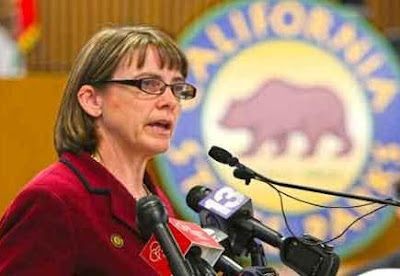
California state parks director resigns amid $54 million scandal

California State Parks Director Ruth Coleman resigned. (AP Photo/Rich Pedroncelli) 
By Matthew Renda
Tahoe Daily Tribune


GRASS VALLEY, Calif. — The director of California's state parks resigned and a deputy was fired Friday after officials learned the department sat on nearly $54 million in surplus money for years, while parks were threatened with closure over budget cuts.

Parks Director Ruth Coleman stepped down, and chief deputy Michael Harris was let go, amid questions about the underreported funds dating back 12 years, according to Clark Blanchard, a spokesman for the secretary of the Natural Resources Agency, which oversees the parks department.

Local officials expressed a mixture of outrage and astonishment at the news that the parks department intended to close 70 parks to save $22 million over two years while reportedly sitting on reserves of more than twice that amount.

“You don't go around coercing community groups and nonprofits to solve your problems while you're sitting on reserves that size,” said Caleb Dardick, executive director of the South Yuba River Citizens League, which has taken a leadership role in raising awareness and funds to keep open two Nevada County parks — Malakoff Diggins State Historic Park and South Yuba River State Park.

In February, Dardick led a contingent of local environmental leaders, conservationists, park advocates and children from Grass Valley Charter school, to hand deliver more than 10,000 petitions to Coleman.

At the time, Coleman praised the contingent, including western Nevada County officials and the children for developing a sustainable plan to keep the park open.

Dardick said those words now ring hollow.

“The state parks staff betrayed the public trust, they betrayed our community and betrayed our children,” he said. “As a sign of good faith, the parks department should immediately restore full services to both parks.”

Alden Olmsted, who has undertaken a comprehensive fundraising effort that encourages people to provide $1 to buckets strategically placed at businesses around the state, said he has long suspected something wrong was afoot.

“Now I know why it was so difficult to try and help the parks system,” Olmsted said.

Olmsted said he repeatedly pressed park officials for specific figures regarding what it would take to keep specific parks open and was repeatedly rebuffed.

“The numbers were erroneous all along,” he said.

Assemblyman Jared Huffman, D-San Rafael, who emerged as a consistent critic of how the parks department conducted the park closure process agreed with Olmsted in a Friday news release.

“As we've dealt with the parks funding crisis, I've repeatedly expressed my concern about the lack of transparency and the fortress mentality at State Parks,” Huffman said. “The only good news I can see from this scandal is that it will bring much-needed transparency, accountability, and a serious ‘reset' to an agency that desperately needs it.”

State Sen. Doug LaMalfa, R-Richvale, joined the chorus of voices in denouncing the fiscal fiasco.

“Though I am happy to discover there is money to keep California's parks open, I am disappointed in the State Parks Director and her staff for concealing money from California's taxpayers while calling for the closure of 70 state parks,” LaMalfa said.

The attorney general's office is investigating and state finance officials will conduct an audit, Blanchard said.

The resignation comes at a time when state lawmakers and park advocates have been trying to find ways to keep most parks open despite ongoing budget cuts. Last month, park officials announced most of the 70 state parks once slated to close would remain open due to various operating agreements.

The Sacramento Bee first reported Coleman's resignation Friday, after inquiring about the possibility of a surplus. In addition, the newspaper reported Sunday about a secret vacation buyout program for employees at department headquarters that cost taxpayers more than $271,000.

State officials said the “hidden assets” that prompted the shake-up were found by new park fiscal staff while the attorney general's office was looking into the unauthorized vacation buyouts.

It's not clear why the accounts weren't properly reported. A preliminary investigation shows the parks department underreported two funds as far back as 2000.

The state parks and recreation fund, which is generated from park fees and rentals, held $20.4 million more than was reported. The off-highway vehicle fund, which is generated from registering ATVs and similar types of vehicles, held $33.5 million more than reported.

Officials said Gov. Jerry Brown accepted Coleman's resignation and has appointed California Natural Resources Agency Undersecretary Janelle Beland as acting interim director of the department.

California operates 279 parks, which include famous beaches to redwood forests. The parks that were at risk of closure got a reprieve last month after the governor signed a bill allocating new funds for the beleaguered parks system for the next year.

The state has also reached agreements with nonprofits, local governments and others to keep 40 parks open at least for a few years.

A large share of nonprofit funding has come from the California State Parks Foundation, a nonprofit arm of the state parks that raises money to support the parks mission.

The foundation has issued $833,000 in grant money over the past two months to help finalize operating agreements, according to the foundation's Director of Communications Jerry Emory.

Emory said the foundation is “shocked and dismayed” at the news of the parks department shake-up, but said the discovery of the funds does not necessarily mean the fiscal crisis has passed.

“The California State Parks' budget has been reduced by 33 percent in the last four years,” he said. “There is still $1.3 billion looming in deferred maintenance — these parks are falling apart.

Nonprofits and community groups will still need to continue to raise the necessary funds to ensure the long-term viability of all 70 parks on the list.

California State Parks recently came to a donor agreement to keep Malakoff Diggins State Historic Park open through the next year.

The agreement involved SYRCL, the Malakoff Diggins Park Association and the Olmsted Park Fund and a reduction of services.

Dardick had planned to meet with Marilyn Linkem, the supervising ranger of the Sierra District next week to finalize the agreement, but it remains unclear on Friday how the news of the underreported funds will impact this agreement.

July 2, 2012

Most Calif. parks escape ax, but not out of woods

by Peter Fimrite
San Francisco Chronicle


California's state parks have emerged almost intact from the vortex of red ink coursing through the state, but officials insist it will take more time, work and a lot more money to save the beleaguered system during the next budget cycle.

Only two of the state's 278 parks will be shut down completely, a far cry from the 70 scheduled last year for closure due to the state's seemingly perpetual budget crisis. But the park system is a long way from being out of the woods. The dozens of agreements recently struck with nonprofits and foundations to run parks are all temporary, meaning the state could be facing more closures next year and the year after.

John Laird, California's secretary for natural resources, said that the park system is ultimately the government's responsibility and that permanent solutions must be found by the Legislature.

"We will probably in some form be looking at what the future of the state parks department is," Laird said. "We're going to have to take a look overall at what the best way is to have a sustainable parks department for the generations to come, and it's something that in some form we will do over" the next year.

As of now, operating agreements have been signed for 40 parks that were originally on the closure list. Twenty-five others, including Candlestick Point State Recreation Area, are in active negotiations with organizations that are prepared to provide security, parking attendants, rangers and other services, Laird said.

5 parks could be cut

Five parks are still on the chopping block: Gray Whale Cove State Beach near Pacifica; Benicia State Recreation Area in Benicia; Zmudowski State Beach near Moss Landing in Monterey County; the California State Mining and Mineral Museum in Mariposa County; and Providence Mountains State Recreation Area in San Bernardino County.

The Providence recreation area has already been closed for months. The mining museum will also be shutting its doors, but officials said it still could be saved. The two beaches will not have any services, but California law requires them to remain open to the public. The Benicia recreation area will remain open with limited services while state park officials work with the city on a long-term solution, park officials said.

The mass closures scheduled for Sunday were averted thanks to a move by the Legislature to spare the parks by giving them $41 million. But Gov. Jerry Brown slashed that funding to $10 million last week. Still, combined with $13 million in redirected bond payments, the funds bought state park officials more time to complete deals with nonprofit organizations, foundations, government agencies, regional park districts, associations and private companies willing to run a park.

"It will give us a path to keep most, if not all, state parks open, and it will help make parks more financially sustainable," Laird said. "I think we are on a path to potentially keep all the state parks open."

The park situation has become a major crisis in California, which is responsible for 1.4 million acres of land, including 280 miles of coastline and 625 miles along lakes and rivers. The state parks, which also include historic buildings, museums and sites, generate billions of dollars in revenue from tourism and have been particularly important to Californians recently as the economy tanked and more people turned to affordable camping vacations as options.

Public outrage over the cuts prompted groups and individuals to begin raising money, including one man who went from park to park with donation buckets. Park prospects improved dramatically after the passage of AB42, introduced by Assemblyman Jared Huffman, D-San Rafael, which smoothed the way for nonprofit groups to take over park operations.

"I think part of this narrative is we have re-energized the people who love parks, and they are stepping up and contributing to these parks in all kinds of ways," said Ruth Coleman, director of California State Parks. "It's a new way of everybody getting involved and protecting these extraordinary resources, and this is going to be the new model for California."

Huffman, chairman of the Assembly Water, Parks and Wildlife Committee, has been a major catalyst in the effort to save park programs. The $13 million infusion of bond money will go into an enterprise fund and be used by the parks department to develop new revenue-generation programs, a scheme first proposed in AB1589, the California State Park Stewardship Act of 2012, introduced by Huffman.

Pay machines in the works

Coleman said her department plans to place solar-powered pay machines in parking lots and at kiosks, so that park visitors can easily use credit and debit cards. Officials are also working on deals with county governments to put up road and parking signs and otherwise encourage people to come into parks and pay instead of parking on county roads and walking in. Diesel generators will be replaced by solar power to cut down on fuel costs, she said, and more backcountry cabins and alternative camping sites will be built for visitors to rent.

Some successful new ventures have already been put in place, she said, including the recent opening of a wine-tasting kiosk at Topanga State Park in Malibu, an annual blues festival at Marshall Gold Discovery State Historic Park in Coloma and a recent Broadway-style production inside the ruins at Jack London State Historic Park for which 400 people paid $40 each.

"There's a lot of different creative ideas that staff have been generating internally already, and with these funds we think we can really push forward and come up with some exciting new developments that will help the department create more of a sustainable enterprise model," Coleman said.

There is, for now, less of a threat that there will be more of the kind of criminal activity that happened earlier this year at the remote Providence recreation area, where vandals smashed windows at the vacant visitors center and stripped copper wiring connected to the lighting system for the park's Mitchell Caverns.

Some people are concerned that California is in the process of selling off its park system to private entities in an attempt to ward off transients, pot growers and vandals, a fear that Huffman said is premature.

"We're trying new things, a lot of which have never been done before, in the nadir of the worst financial crisis since the Great Depression," Huffman said. "We are going to see how that plays out to assess the degree nonprofits can be a solution, but the upwelling of support is a part of why I think we have a very solid chance of saving our parks. Legislators have heard the public, which is playing a huge role in shaping this debate."